
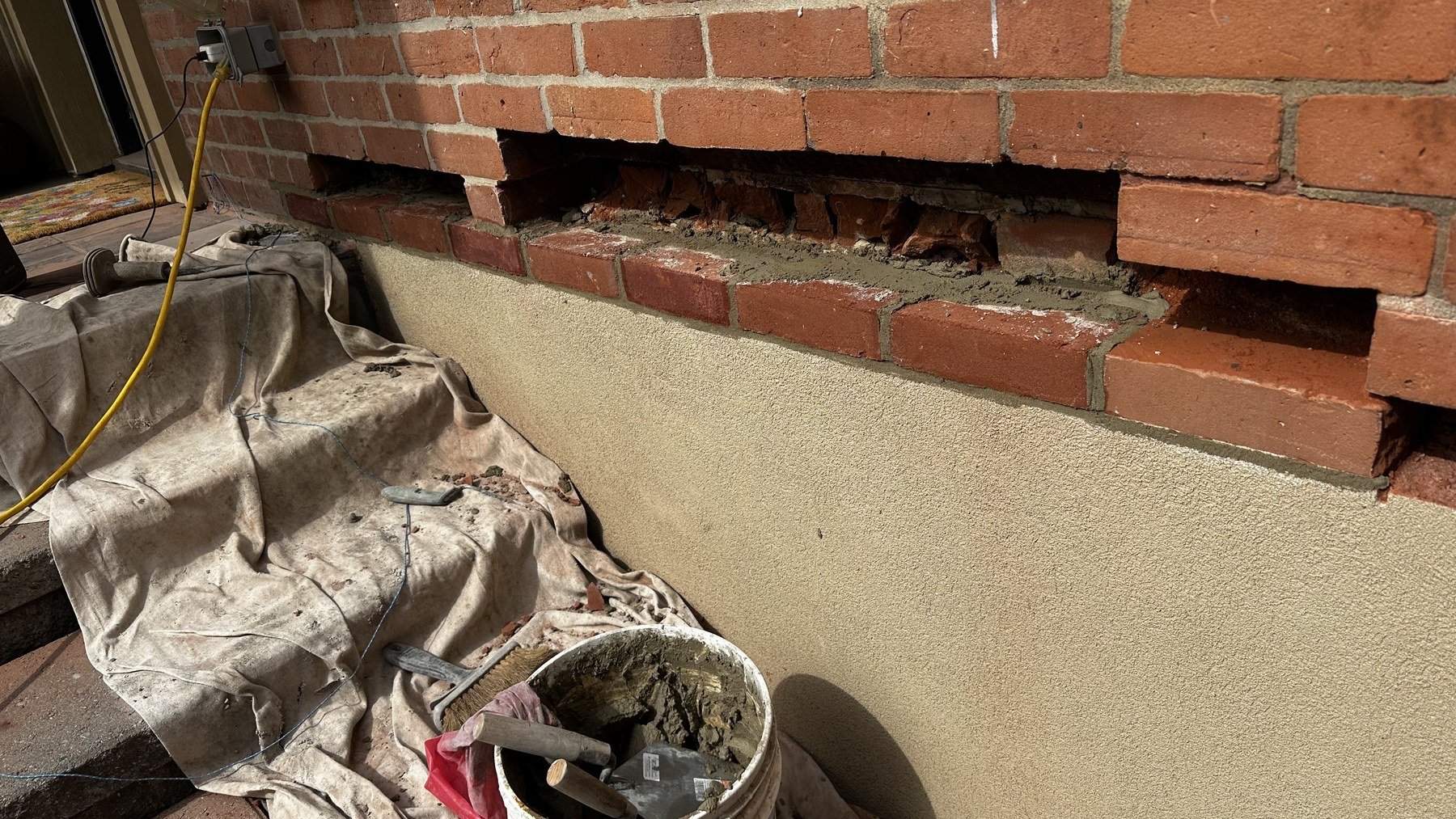
Brick replacement means cutting out only the damaged units, setting matched brick in their place and repointing the joints to blend with the wall. On a Toronto house it is a routine masonry repair, and done properly it disappears into the wall.
The damage that calls for it is easy to spot. A brick with its face popped off. A crack running straight through one unit. A corner that turns to powder when you press it. Done badly, the repair shows for years and the damage carries on next to it.
Here is how we approach a replacement, step by step, and the signs that replacing a few bricks is the wrong answer for your wall.
From damaged unit to matched replacement, step by step
- Find out why the brick failed. A brick that spalled under a leaking downpipe will fail again if the downpipe stays as it is. The cause is fixed or planned for before the brick is touched.
- Cut out the joints around it. The mortar around the damaged unit comes out first, so the brick is freed without levering against its neighbours.
- Remove the brick, in pieces if needed. A damaged brick often comes out broken. The aim is to take out only that unit and leave the bricks around it undisturbed.
- Clean the opening. Old mortar and debris are cleared from the pocket so the new brick beds fully.
- Match the replacement. Size, colour, texture and how the brick has weathered all matter. On older homes that often means reclaimed brick.
- Bed and point it. The new brick is set in mortar suited to the wall, then the joints are finished to blend with the rest of the elevation.
That is the long version of how our brick repair page sums it up: damaged brick comes out, matched brick goes in, and the joints are repointed to blend with the wall.
Repair in place or replace
Not every damaged brick has to come out. When the core of the brick is sound, a repair in place is sometimes possible. Spalled brick is different. Once the hard face has flaked away, the soft core is often left open to water and the damage can speed up from there, so spalled brick generally needs replacing.
We make that call at the wall, with the brick in front of us, and tell you straight which one you have.
When one brick at a time is the wrong answer
Replacing individual units makes sense when the wall itself is sound. Some patterns point to a bigger problem, and swapping bricks would only hide it for a while.
- Many spalled bricks across one area, which usually means water is getting into that part of the wall from somewhere above or behind it.
- A section bulging outward, which needs a proper assessment before anyone cuts into it. Our masonry repair page is blunt about it: that kind of bulge is repairable, but not patchable.
- Cracks stepping through the bricks above a window or door, which can signal movement or a failed lintel.
- Worn joints right across the wall, where tuck pointing is the main job and replacement is the smaller part.
Replacing a brick yourself
Swapping one damaged brick low on a sound wall is a job some handy owners take on. The risk is in everything around it: cutting into the bricks next door, using a mortar harder than the brick, which can grind the brick down at the joints, or treating a symptom of a bigger problem as a one brick fix.
Near openings, high on a wall, on a chimney, or anywhere the wall is moving, do not take it on yourself. The test is simple. If you cannot say why the brick failed, you are not ready to replace it.
Show Brick Aid Masonry the damage
Send a photo of the damaged bricks and a wider shot of the wall around them. We will tell you whether it is a few units or something more, and the repair carries our 2 year workmanship warranty. Request a free quote.