
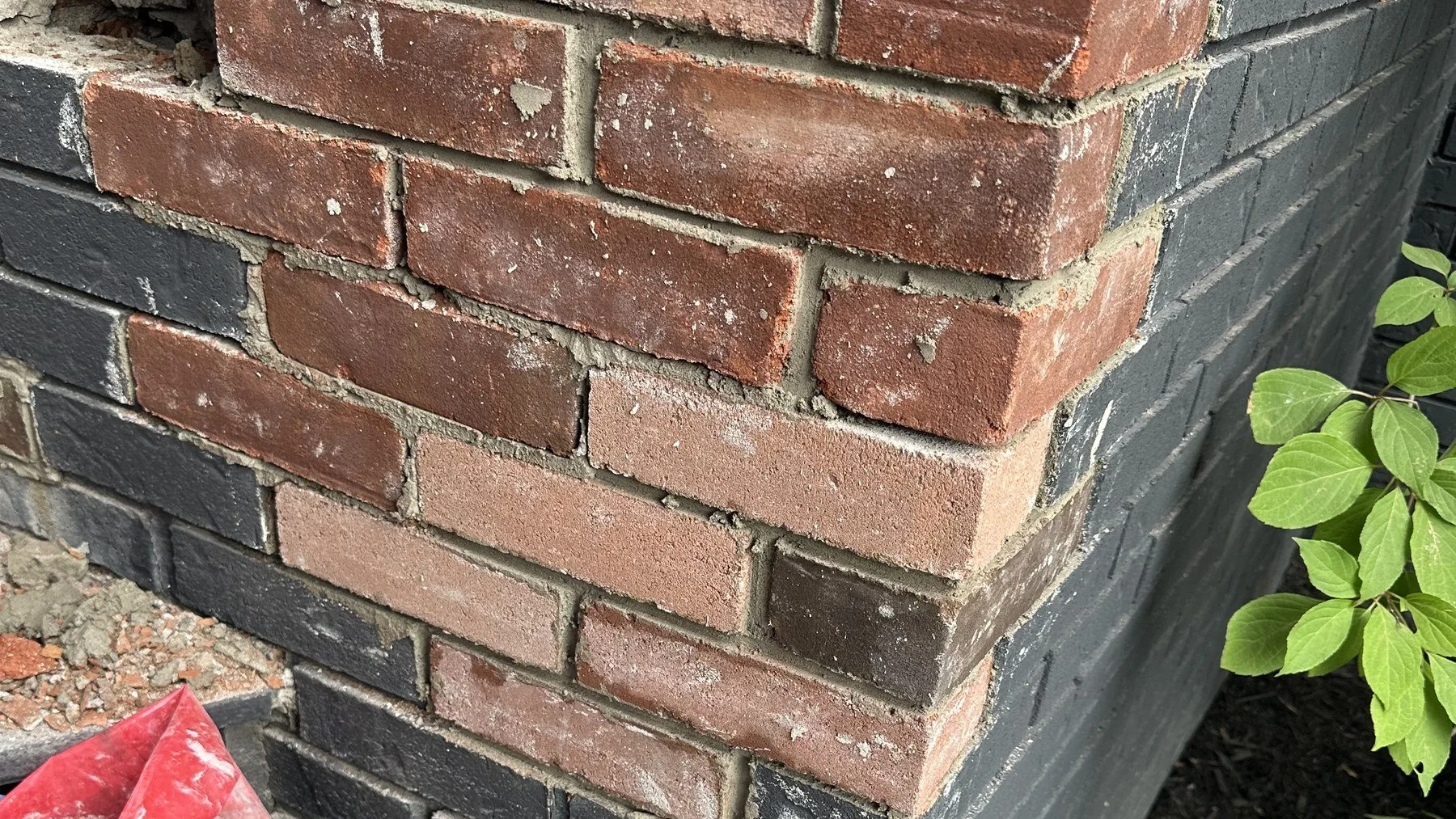
Is a garden wall leaning toward the sidewalk? Does a pier cap rock when you push it, or does a crack open beside the gate post every spring?
Brick fence and garden wall repair starts at the cap and the footing, because freestanding brick takes weather on every side and has nothing warm behind it. Fences, garden walls and entrance pillars are built differently from the walls of your house, and they live a harder life.
Across Toronto we build garden and privacy walls and pillars, and repair failing brick, block and stone. This is how we read a freestanding wall before quoting, so you know a quick repair from a rebuild and avoid paying for joints on a wall that is quietly tipping over.
No roof and no warm side
The brick on your house is sheltered by eaves and has heated rooms behind it. A garden wall or a brick fence gets rain and snow on both faces and across the top, then freezes right through. Every joint is exposed from two sides, and nothing dries it from behind.
That is why joints on a freestanding wall often give up years before the joints on the house beside it. Repointing is the whole repair when the bricks are sound and the wall is still plumb, and our tuck pointing page covers that work.
The cap is the roof of the wall
Whatever sits on top of the wall, whether stone copings, pier caps or a row of brick, keeps water out of the core. On our stonework page we describe sills, wall caps and pier caps as the details that protect everything below them, and on a garden wall that is literally true.
A cracked cap, open joints between copings, or a cap with no overhang sends water straight down into the wall. Fix the top first. Repointing the sides of a wall under a failed cap feeds the new joints with water from above.
Leaning usually starts below ground
A wall that leans, or has a long crack running down from the top, is rarely a mortar problem. The usual cause is what it sits on. Our bricklaying page puts it bluntly: skipping the footing is why so many garden walls lean within five years. Tree roots, soil washing out on one side, or frost moving a shallow base all show up as the same tilt.
A leaning section is not something you repoint straight. If the base is the problem, the honest fix is to take that section down and rebuild it on a proper footing.
Gate pillars carry a moving load
An entrance pillar holding a gate is pulled every time the gate swings or catches the wind. Over time that loosens the hinge fixings, cracks the pillar around them, or rocks the whole pillar on its base. Check the hinge side of the pillar first, and look at whether the gate still hangs level.
Check whether it is really a retaining wall
If the wall holds back soil, with the ground higher on one side, treat it as a retaining wall, where drainage matters most. The City of Toronto building permit list also includes retaining walls more than one metre high in certain locations, such as on or next to public property.
Our verdict on garden walls and pillars
Sound wall, failed joints: repoint it. Loose or cracked caps: rebuild the top before anything else. Leaning, bellied or split from the top: rebuild that section on a proper footing. Most garden walls fall into one of those three, and the right answer should be clear before anyone mixes mortar.
Show Brick Aid Masonry the damage
Send us a photo taken from the end of the wall and one of the worst spot. We will tell you which of those three you are dealing with, and the written quote is free. Request a free quote.