
Church Masonry Restoration: How to Plan Repairs in Practical Phases
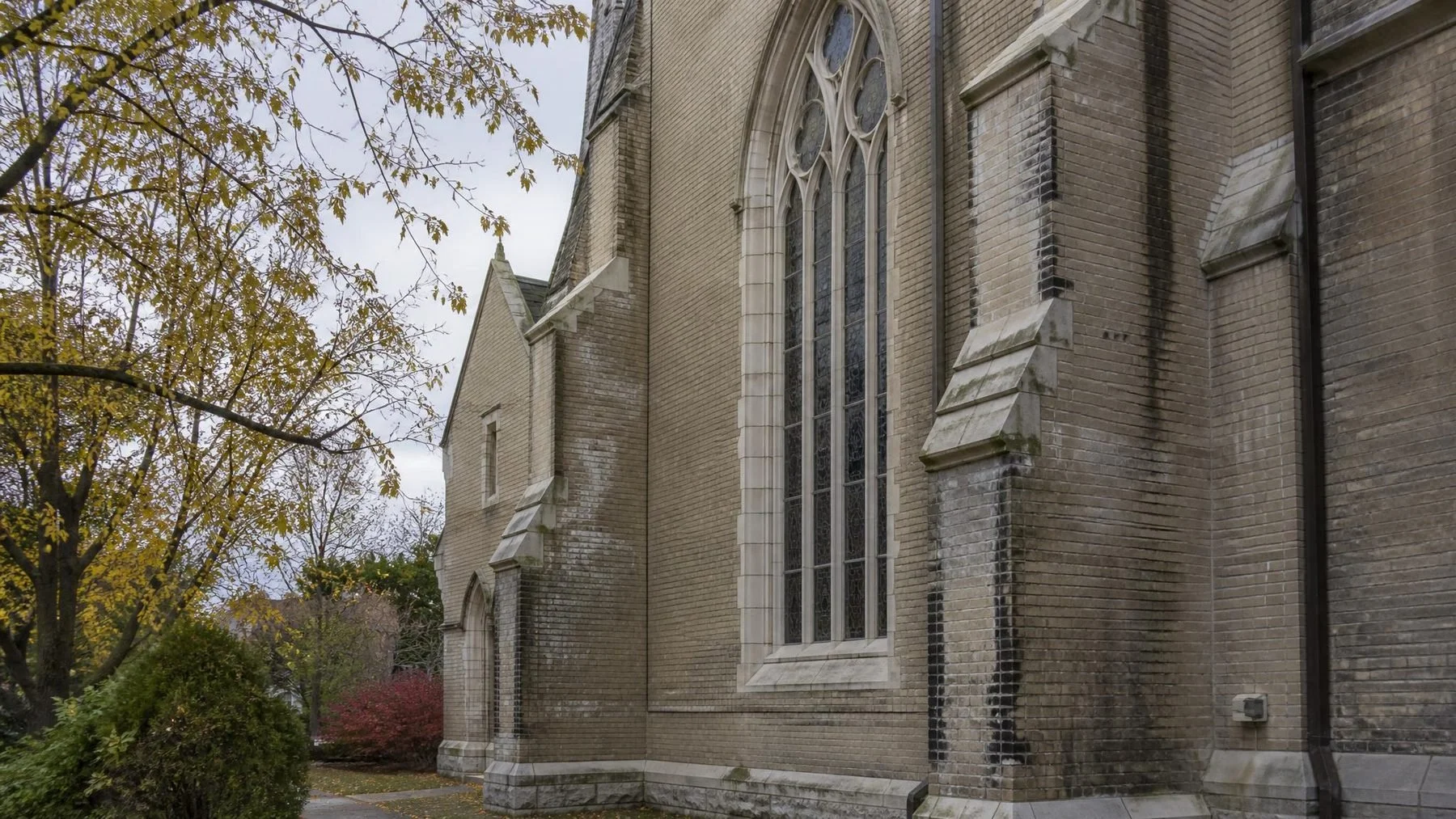
A church masonry restoration almost never happens in one season, and it should not have to. Start with documented safety and water entry priorities, then phase envelope repairs, material matching, and appearance work around the building calendar and available budget. That order lets a board fund the work in pieces without leaving the building worse off between phases.
Toronto and the GTA hold a great many stone and brick churches built for a congregation and a budget that no longer look the same. The masonry is often original, the records are patchy, and the people making the decisions are volunteers with a fiduciary duty and no trade background.
We work from what a condition review actually shows rather than from a wish list, and we will say plainly when a phase can wait a year and when it cannot. What follows is how the phases usually fall out.
Begin With a Condition Review You Can Hand to Anyone
Before phases can be drawn, someone has to write down what the building is doing. A review worth paying for is one that a new board can read in three years and still act on.
What the review should record
- Every elevation photographed wide, with each defect photographed close and located.
- Loose or displaced stone and brick, with the route below each one noted.
- Joint condition by elevation, including where mortar has been replaced before.
- Towers, parapets, buttresses, sills, tracery and any carved detail, listed separately.
- Every interior stain, damp patch and salt deposit, with the date first seen.
- Roof, gutter and downspout condition where it discharges onto or beside masonry.
What it should not do
It should not price a scope that has not been defined, and it should not describe cause where cause has not been established. A review that says a crack is from settlement without evidence sends the next decision down the wrong road.
Phase One: Protect People, Then Stop the Water
This phase is not negotiable and it rarely looks like much when it is done. It is also the only phase with a deadline set by something other than the budget.
Safety work
Anything that can fall from a tower, parapet, gable or sill over an entrance, a walkway or a parking area gets controlled first. Closing a route, netting an area or taking down a genuinely unstable element is a legitimate first phase even when nothing is rebuilt that year.
Water entry work
Then the active paths: open joints at the top of the wall, failed cap and coping joints, flashing, blocked or disconnected drainage, and grade that puts water against the base. Stopping water is what keeps every later phase from having to be done twice.
Phase Two: Envelope Repairs on the Elevations That Need Them
With the water controlled, the envelope work can be sequenced by elevation rather than by severity alone. The south and west faces usually take the most weather, and a single elevation is a clean funding unit a congregation can understand.
Joint replacement, resetting displaced units, replacing units that have lost their face, and rebuilding short sections to stable work all belong here. This is the body of a church and institutional restoration and it is where most of the budget goes.
Why one elevation at a time works
Access and staging are a large part of the cost, so finishing everything reachable from one setup is efficient. It also gives the board a visible, completed result at the end of each phase, which matters when the next phase needs to be approved.
Phase Three: Matching Material to What Is Already There
Material matching is a decision, not a detail, and on an older church it sets the quality of everything that follows.
Why the Mix Has to Suit the Stone Around It
The mix has to suit the units it sits between. On soft historic brick and many older stones a harder modern mortar transfers stress and moisture into the unit, and the unit is the part you cannot replace in kind.
Units and profiles
Replacement stone and brick should be matched for size, texture, colour range and absorption, not colour alone. Joint width and profile should follow the original work. Where carved detail is involved, the question of whether to repair, replicate or leave the weathering is a conservation decision that belongs on the record with a reason attached.
Phase Four: Appearance Work, Deliberately Last
Cleaning, graffiti removal, paint removal and final joint finishing come after the building is sound and dry. Done earlier they get undone by the next phase, and on historic masonry an aggressive cleaning method can cost more in damage than it returns in appearance.
| Phase | What it buys | What decides the timing |
|---|---|---|
| Condition review | A record any future board can act on | Do it before any phase is priced |
| Safety and water entry | Nothing falls and nothing gets wetter | Set by the hazard, not the budget |
| Envelope repairs | Joints, units and sections made sound | One elevation per funded phase |
| Material matching | Repairs that last and look right | Decided with the first envelope phase |
| Appearance work | The result the congregation sees | Only after the building is dry |
Where Approvals and Engineering Sit in the Schedule
Structural questions such as a leaning tower wall, a cracked buttress or a failing arch are defined by a structural engineer first, and the masonry scope follows that brief. General repairs that are not heritage sensitive can proceed as ordinary masonry repair, and the broader conservation approach sits with historical restoration.
What a Board Should Take From This
Phasing is not a way of delaying the work. It is how a building of this kind gets restored at all. Get a written condition review, fund safety and water entry first, then buy one sound elevation at a time, decide materials once and apply that decision consistently, and leave the cleaning until the end. Keep engineering and heritage review ahead of the trades rather than behind them.
Show Brick Aid Masonry the damage
We are a family owned masonry company serving Toronto and the GTA, and we work on churches, institutional buildings and heritage facades. We assess in person, give you an honest free quote, and back our work with a 2 year workmanship warranty. Request a free quote and send us photos of what you found.