
How Much Does a Retaining Wall Cost in Toronto?
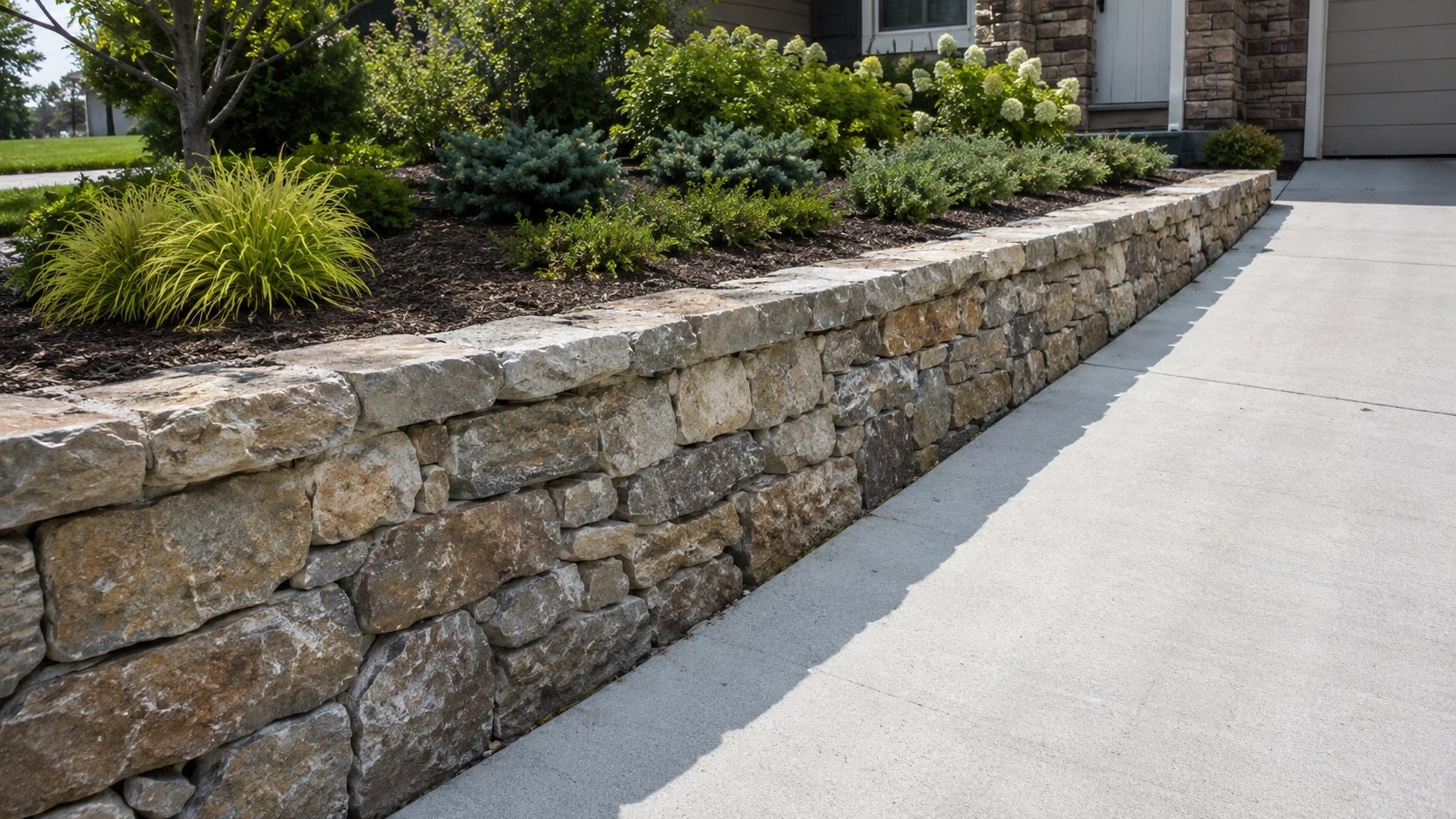
A retaining wall is the most structural thing most homeowners ever add to their yard. It holds back soil that weighs more than a parked car per metre, it moves with every wet spring and frozen winter, and when it is built wrong it does not just look bad. It leans, then it fails. Here is what a properly built wall costs in Toronto in 2026, why the cheap quote is usually the wall that fails, and when the City gets involved.
What retaining walls cost in 2026
| Wall type | Typical 2026 range (GTA) |
|---|---|
| Installed wall, most materials | $35 to $65 per sq ft of wall face |
| Natural stone | $40 to $80+ per sq ft |
| Typical project, 4 ft high x 50 ft long | $8,000 to $12,000 |
| Engineering (walls over 1 m) | $1,500 to $3,500 |
| Building permit | $200 to $500+ |
Square footage means the face of the wall, height times length. The spread inside each range comes from site access, drainage work, demolition of an old wall, and how much excavation the footing needs. Our retaining walls page shows what we build and how we price it.
Material choices, honestly compared
Natural stone
The premium option and the one that suits Toronto's older neighbourhoods best. Armour stone and cut flagstone walls last generations and look better as they age. They cost the most up front and need proper base work like everything else. Stone walls pair naturally with flagstone steps and walkways, and both fall under our stonework trade.
Interlocking concrete block systems
The mid range workhorse. Engineered block systems are consistent, faster to install, and handle geogrid reinforcement well on taller walls. A good choice where budget and height both matter.
Poured concrete and masonry walls
Strong and clean lined, at $47 to $64 per square foot and up. They need proper drainage detailing behind them because concrete gives water nowhere to go on its own.
Wood ties
The cheapest install and the shortest life. Ground contact wood in our climate is a 10 to 15 year wall. We rebuild a lot of failed tie walls in stone and block.
Why retaining walls fail, and why it is never the face you see
Almost every leaning wall in the GTA failed behind the wall, not in front of it. Water builds up in the retained soil, freezes, expands, and pushes. A wall built without gravel backfill, weeping tile, and drainage outlets is holding back saturated soil that doubles in force when it freezes. The visible material barely matters at that point. The fix list on a proper build always includes a compacted base below frost influence, clear stone backfill, filter fabric, and a drainage path. If a quote does not mention drainage, that quote is for a future rebuild.
Permits: the 1 metre rule
In Toronto, a retaining wall generally needs a building permit when it stands over 1 metre tall, and engineering drawings come with the application. Under 1 metre on private property, no permit in most cases. Two cautions. Terracing one tall slope into stacked short walls to dodge the rule does not work if the walls act together structurally, and walls near property lines, driveways, or public rights of way get extra scrutiny. On designated heritage properties, boundary and landscape changes can also need a heritage permit. Confirm before you dig, not after a complaint.
Repair or rebuild an existing wall?
A masonry wall with failed joints but a straight face can often be repointed and drained, the same trade as tuck pointing on a house wall. A wall that leans, bulges, or steps out of line has a structural problem behind it, and money spent on the face is wasted. The honest assessment is a plumb line and a look at what the original builder did about water. We give that assessment free, and our advice is sometimes that the wall has years left in it.
Frequently asked questions
How much does a small retaining wall cost in Toronto?
A short garden wall under 1 metre, around 6 to 10 metres long, typically lands between $3,000 and $8,000 installed depending on material and access. Minimum charges apply on small jobs because base preparation costs the same per metre regardless of wall height.
Do I need a permit for a retaining wall in Toronto?
Generally yes when the wall exceeds 1 metre in height, and the application needs engineered drawings. Below that, usually no permit on private property away from public access. Rules differ across GTA municipalities, so confirm locally.
How long does a retaining wall last?
Natural stone and properly drained masonry walls last 50 years and beyond. Engineered block systems run 25 to 50 years. Wood tie walls typically fail within 10 to 15 years in our freeze and thaw climate.
Why is my retaining wall leaning?
Water pressure behind the wall, almost always. Missing drainage, clogged weep holes, or a base set too shallow against frost. A lean that grows is a wall on a schedule, and earlier intervention is dramatically cheaper.
What is the cheapest retaining wall that is still worth building?
A properly drained interlocking block wall. It beats wood on lifespan by decades for a modest price difference, and unlike a cheap wall built without drainage, it only has to be paid for once.
Planning a wall or watching one lean? Brick Aid Masonry builds and rebuilds stone and masonry retaining walls across Toronto and the GTA, drainage first, with a 2 year workmanship warranty. Free on site quotes.
Request a free quote