
Restoring a Century Home: What Heritage Masonry Involves
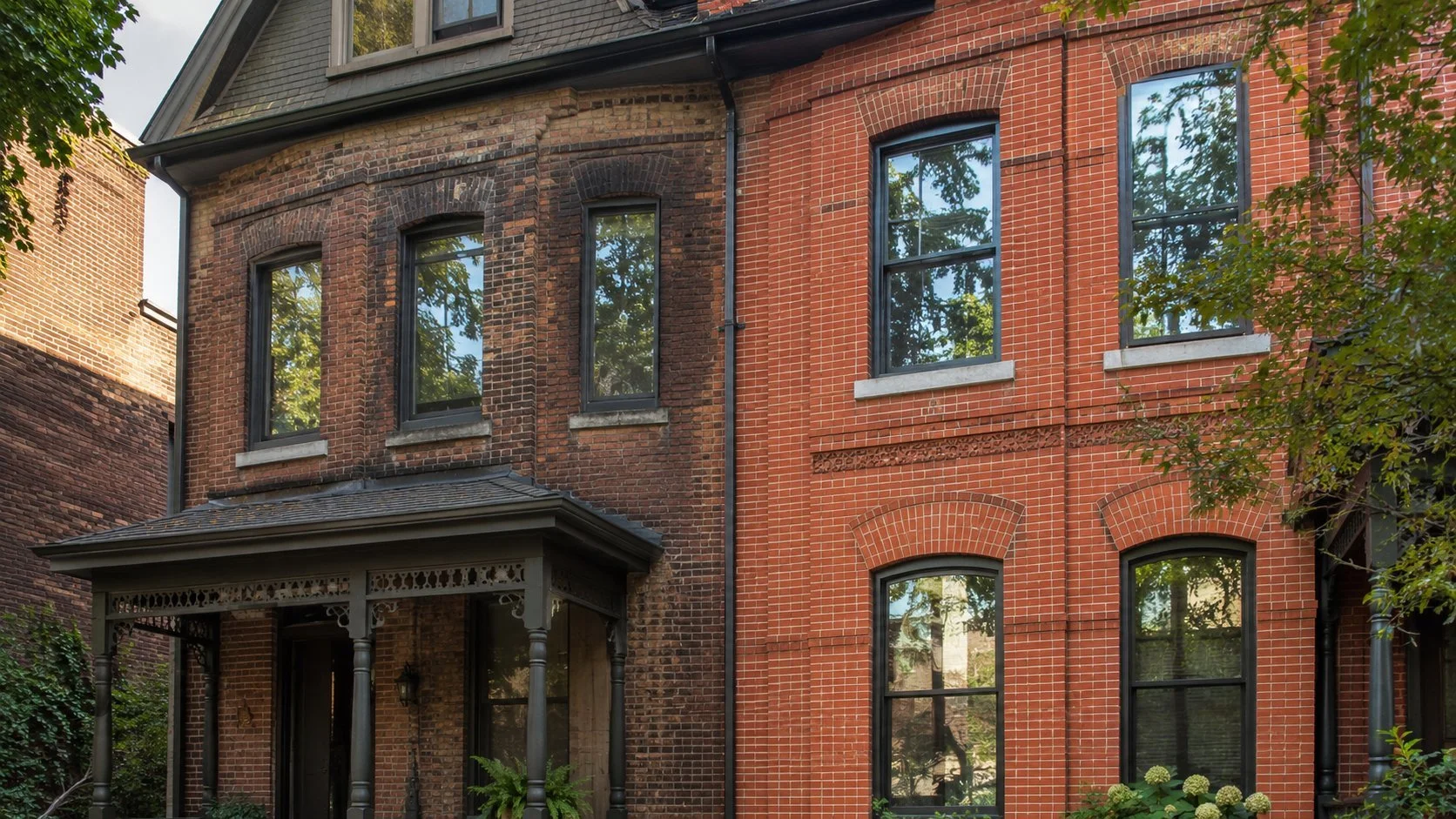
Toronto is a city of century homes. Whole neighbourhoods of Victorian and Edwardian brick have stood through a hundred winters, and most of them are on their second or third round of masonry repairs. Some of those repairs helped. A lot of them are the reason the wall now needs restoration. If you own an older brick home, this is what proper heritage masonry work involves, why it differs from standard repair, and what the City requires before you touch a designated property.
Old walls are a different construction, not just an older one
A pre 1930 Toronto brick wall is usually solid masonry, two or three wythes of brick bonded together, holding the building up. Modern brick is a veneer, a single decorative layer in front of a framed structure. The old wall breathes, flexes, and manages water by absorbing and releasing it. That behaviour is the key to everything, because repairs that stop the wall from breathing kill it slowly.
The brick itself is softer too. It was fired unevenly by modern standards, and its survival depends on the mortar around it being softer still, so the mortar takes the movement and the weathering. That is why the joints on your century home have been repointed before and the brick mostly has not.
The cement mortar problem
The most common heritage mistake in Toronto is repointing soft lime mortar joints with hard modern cement mortar. The hard mortar refuses to flex and refuses to pass moisture, so both jobs get pushed into the brick. A few winters of freeze and thaw later, the brick faces pop while the proud grey joints stand untouched. Once you know the pattern you will see it on every second street: crisp joints, exploded brick. The mechanics are covered in why bricks crumble, and undoing this mistake is a large share of real historical restoration work.
Proper heritage repointing matches the original mortar in softness, composition, colour, and joint profile. That usually means a lime rich mix, raked and packed by hand, tooled to the historic profile. It costs more per foot than cement pointing. It is also the difference between a wall that lasts another fifty years and one that eats itself.
What a restoration project actually involves
Assessment before anything
A proper job starts with reading the wall. Which repairs are historic and stable, which are recent and harmful, where water enters, which bricks are original and salvageable. On tricky facades a mortar analysis identifies the original mix.
Matching materials
Replacement brick gets sourced to match in size, colour, and hardness, often reclaimed brick from demolition salvage because modern brick is denser than the wall around it. Stone sills, lintels, and decorative elements get repaired in place where possible, or recarved to match, which is stonework in its own right.
Repair with restraint
Good restoration replaces what is failed and keeps everything sound, even where the sound material shows its age. Character is not damage. A facade stripped of every weathered brick is not restored. It is replaced.
Heritage permits: when the City is part of the project
If your home is designated under the Ontario Heritage Act, individually or as part of a Heritage Conservation District, exterior alterations need a heritage permit from the City of Toronto before work begins. Like for like maintenance is often exempt, but the definition is narrower than most owners expect, and repointing in the wrong mortar or replacing brick with a visibly different unit can put a project offside. The permit process wants to see materials, methods, and drawings. A contractor who works heritage properties regularly builds that documentation into the quote rather than treating it as your problem. Check your property's status on the City's heritage register before planning work, because plenty of owners find out at permit time.
What restoration costs, honestly
Heritage work runs above standard masonry rates because everything takes longer: lime mortar, hand raking, brick sourcing, and documentation. As orientation, standard repointing in the GTA runs $10 to $25 per square foot and heritage lime repointing sits at the top of that range and above. Chimney rebuilds on heritage homes reach $8,000 and beyond where brick matching and detail work are involved. Scaffolding a full Victorian facade is its own budget line. Every serious project starts with an assessment and a written scope, and ours are free. Our general brick repair cost guide gives the baseline numbers for comparison.
Frequently asked questions
How do I know if my Toronto home is heritage designated?
Search the City of Toronto's Heritage Register online for your address. Listing and designation are different statuses with different obligations, and being in a Heritage Conservation District brings its own rules.
Can I repoint a century home myself?
Small sheltered sections with a proper lime mortar, possibly. The risk is the same one professionals spend careers avoiding: hard mortar and aggressive grinding permanently damage soft brick. On a visible facade the safer answer is no.
What is the difference between restoration and repair?
Repair fixes a failure. Restoration returns a wall or facade to sound, historically consistent condition using compatible materials and methods, and its standard is that the work should disappear into the original.
Does heritage work cost more than regular masonry?
Yes, typically because of material sourcing, lime mortar work, hand methods, and permit documentation. It also lasts longer and protects the value that made the house worth owning, so the comparison is not one repair against another. It is one repair against repeating cheap ones.
Do churches and commercial heritage buildings follow the same rules?
The same principles and permit framework apply, with more engineering and staging. We handle those through our church and institutional restoration practice alongside residential work.
Own a century home that needs honest masonry advice? Brick Aid Masonry has completed 500+ restoration projects across Toronto and the GTA, from Victorian facades to the heritage stone at 205 Yonge Street. Free assessments, heritage compliant methods, 2 year workmanship warranty.
Book a free assessment