
Why Are My Bricks Crumbling? Spalling Explained
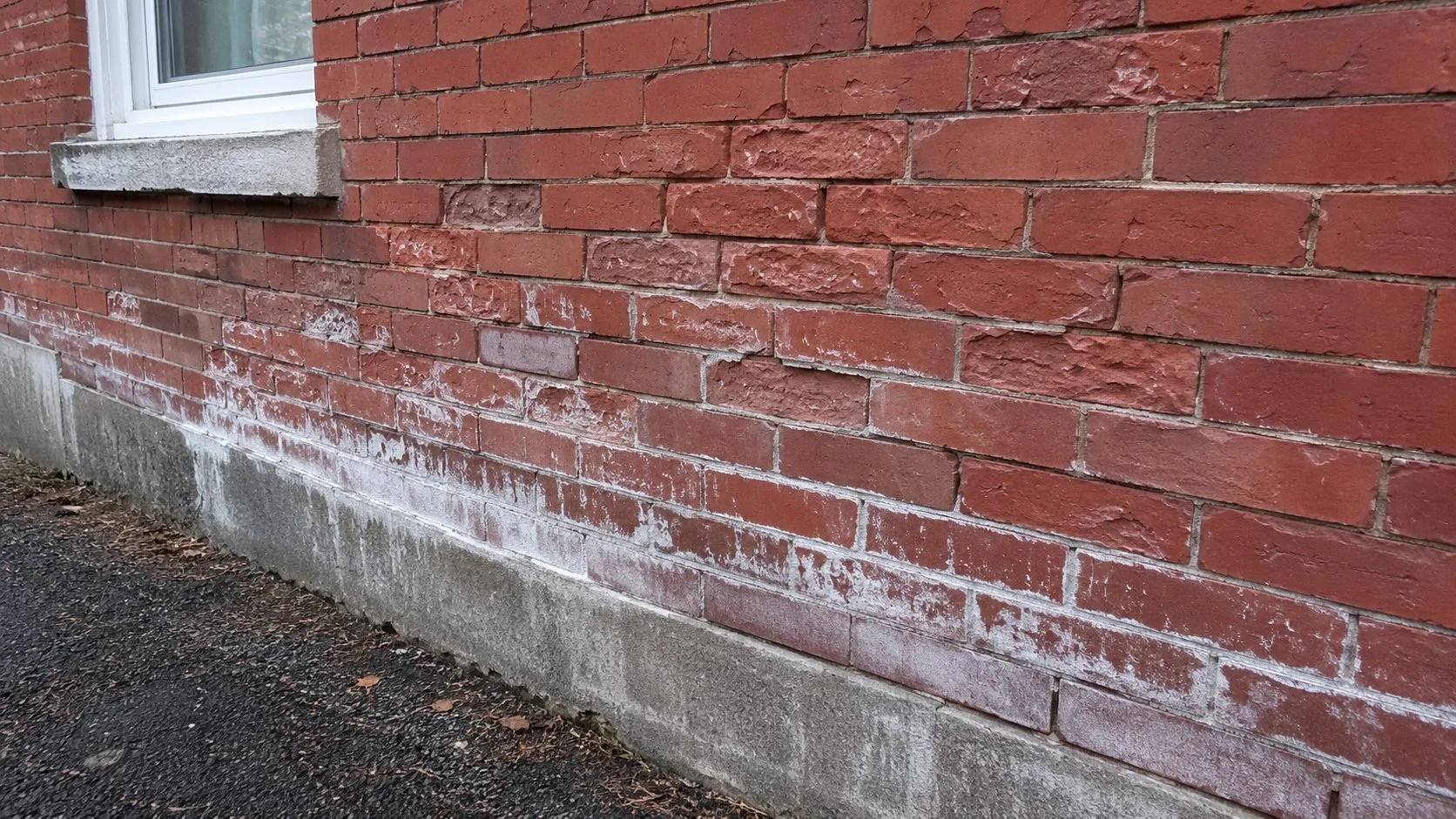
When the face of a brick flakes, pops, or crumbles into rubble at the base of your wall, masons call it spalling. It looks like the brick is just old. It is not. Spalling is almost always a water problem wearing a brick costume, and if you fix the brick without fixing the water, the new brick spalls too. Here is what is actually happening to your wall and what to do about it in the order that works.
The freeze and thaw engine
Brick is porous. It drinks water through open mortar joints, cracks, and its own face. In a Toronto winter, that water freezes and expands roughly 9 percent, then melts, then freezes again through more than 50 cycles in a typical season. Each cycle levers the surface of the brick apart from the inside. The face pops off, the softer core is exposed, and the process speeds up. That is why spalling accelerates once it starts and why it concentrates near the ground, below sills, around chimneys, and on the weather side of the house.
Where the water gets in
- Failed mortar joints. The most common source. Once joints recede or crack, every rainfall loads the wall. Our guide to the signs you need repointing covers this stage.
- Splash and salt at grade. The bottom metre of wall takes roof runoff splash, snow piles, and de icing salt. Salt makes it worse by pulling moisture in and crystallizing inside the brick.
- Failed chimney crowns and copings. Water pours into masonry from above, which is why chimney tops and parapets spall first. See our post on chimney repair versus rebuild.
- Leaking eavestroughs and downspouts. A downspout dumping at a wall corner writes its signature in spalled brick within a few years.
- Sealed brick that cannot breathe. Paint and non breathable sealers trap moisture inside the wall, and the damage happens behind the coating where you cannot see it until it is severe.
The wrong mortar makes it worse
Toronto homes built before roughly 1930 used soft lime mortar, and their brick is softer too. When those walls get repointed with hard modern cement mortar, the mortar stops flexing and stops letting moisture escape through the joints. All the stress and all the moisture go through the brick instead. The result is a wall where the joints look perfect and the bricks around them are exploding. If your home is a century home, mortar selection is not a detail. It decides whether the repair helps or hurts. This is core heritage restoration practice.
How the repair actually works
Step 1: cut the water off
Fix the source first. Repoint failed joints, repair the crown or coping, redirect the downspout, correct the grading. Any brick replaced before this step is on borrowed time.
Step 2: replace the spalled brick
Spalled bricks do not heal. Each one gets cut out and replaced with a brick matched for colour, size, and just as importantly hardness and porosity. Reclaimed brick is often the right answer on older homes. The new units get bedded in compatible mortar. Details are on our brick repair and restoration page.
Step 3: let the wall breathe
Skip the paint and the cheap sealer. If a water repellent is used at all, it must be breathable and it goes on after repairs, on a dry wall. On most repaired walls with sound joints, no coating is needed at all.
What it costs and what waiting costs
Cutting out and replacing a small area of spalled brick typically runs $500 to $1,500 in the GTA, and most combined repair jobs land between $500 and $3,500. The full pricing picture is in our brick repair cost guide. The number that matters more is the trajectory. A dozen spalled bricks and open joints this year becomes a structural rebuild of a wall section in five, and rebuilds start around ten times the price of early repairs.
Frequently asked questions
Can crumbling bricks be repaired without replacing them?
Once the face is gone, no. The damaged units need replacement. Cosmetic patching compounds exist but they do not survive Toronto freeze and thaw cycles on exterior walls.
Is spalling brick a structural problem?
A few spalled faces are not. Spread across a wall, around a lintel, or deep into units, spalling weakens the wall section and can become structural. The earlier it is assessed the cheaper the answer.
Why are only some walls of my house crumbling?
Exposure. The south and west faces take the most sun driven wetting and drying, and walls near downspouts or snow piles take the most water. Different faces of one house age at very different speeds.
Should I seal my brick to protect it?
Not by default. Non breathable sealers and paint trap moisture and accelerate spalling. Fix joints and water sources first. If a repellent is justified, use a breathable one on a dry repaired wall.
Does new brick match old brick?
With sourcing effort, yes. Colour matched new or reclaimed brick blended across the repair area makes the fix hard to spot. A block of obviously new brick in an old wall is the sign of a rushed job.
Bricks flaking at the base of your wall? Brick Aid Masonry finds the water source, replaces the damaged brick with colour matched units, and warranties the work for 2 years. Free assessments across Toronto and the GTA.
Book a free assessment