
What Is Parging and Why Does It Keep Cracking?
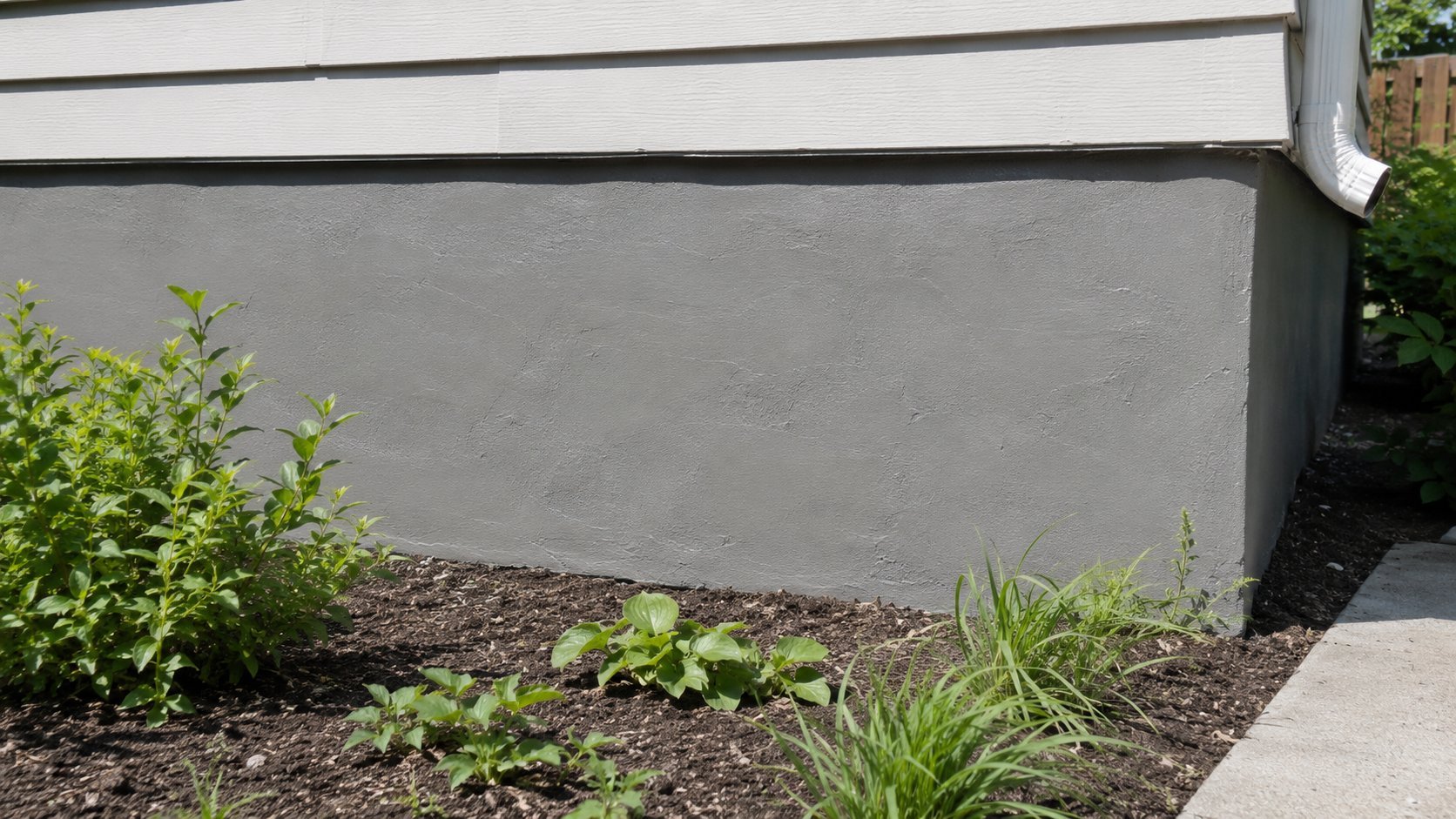
Parging is the smooth mortar coat on the exposed part of your foundation, the strip between the ground and your brick or siding. Most people never think about it until chunks start falling off. Then the questions start. What is it actually for, why does it keep cracking, and is it worth redoing properly? Here are straight answers.
What parging does for your home
Parging is a protective and cosmetic layer, usually a cement based mortar troweled over the foundation in one or two coats. It shields the foundation from weather, sheds water away from the concrete or block underneath, covers surface imperfections, and gives the base of the house a clean finished line. It also closes off the small surface voids where insects like to move in.
One thing parging is not: waterproofing. A parge coat sheds rain and splash. It does not stop ground water from pushing through a foundation wall. If your basement leaks, parging is not the fix, and anyone selling it as one is selling the wrong thing. Foundation moisture problems start at foundation repair, drainage, and grading.
Why parging cracks and falls off
Freeze and thaw cycles
The bottom of your wall gets splashed, soaked by snow piles, and salted all winter. Toronto swings through dozens of freeze and thaw cycles a season, and each one works water deeper into hairline cracks and pushes them wider. This is the main reason parging on the weather side of a house fails years before the rest.
Bad prep on the last job
Parging bonds to clean, sound, slightly dampened masonry. Troweled over dust, paint, loose old parging, or a bone dry wall in July heat, it starts letting go almost immediately. Hollow sounding parging that sheets off in big flakes is nearly always a prep failure.
Movement and settlement
Foundations move a little with the seasons. A rigid cement coat does not. Fine map cracking is normal aging, but a long crack that keeps growing, especially a stair step or widening one, can be telling you about the foundation rather than the parging. Our post on which foundation cracks matter shows how to tell them apart.
Repair or redo?
Small isolated chips and cracks can be patched, and a patch is cheap. But patches on a parge coat that is failing broadly are throwing good money after bad, because the surrounding material keeps letting go around every repair. The honest test: if more than about a third of the coat is cracked, hollow, or flaking, stripping and re parging the whole run costs less over five years than chasing it patch by patch.
What parging costs in Toronto
| Job | Typical 2026 range (GTA) |
|---|---|
| Minor patch repairs | $300 to $600 |
| New parge coat (per square foot) | $3 to $8 |
| With old parging removal (per square foot) | $8 to $18 |
| Full re parge, typical semi | $1,200 to $2,500 |
| Full parge, larger detached home | $2,500 to $6,500 |
Condition drives the spread. A sound block wall with light wear preps fast. A wall with layers of failed coats and crumbling block takes real preparation time, and that is where the money goes. See our parging service page for how we quote it.
What a proper parge job looks like
- All loose and hollow material stripped, not skimmed over.
- Surface cleaned and dampened before the first coat.
- Bonding agent or scratch coat where the substrate needs it.
- Applied in the right weather. Not into frost, not into direct summer sun on a hot wall.
- Sloped away from the house at the top edge so water sheds off it.
- Cured properly, which means kept from drying too fast.
Done this way, a parge coat should give you 15 to 25 years. Done badly, you will see cracks by the second winter, which is exactly the cycle most homeowners are stuck in.
Frequently asked questions
Is parging necessary or just cosmetic?
Both. It protects the top of the foundation from weather and salt while cleaning up the look of the base of the house. Skipping it leaves block and concrete surfaces exposed to exactly the conditions that break them down.
Can I parge over old parging?
Only if the old coat is fully bonded and sound, which it usually is not by the time you are asking. New parging over loose material fails fast. Loose sections need to come off first.
What time of year is best for parging in Toronto?
Late spring through early fall. The mortar needs above freezing temperatures to cure and suffers in direct hot sun, so mild dry weather gives the best result.
How long does parging take to dry?
It sets within a day but cures over about a week. Keep sprinklers, downspout discharge, and salt away from it during that window.
Why does my parging keep cracking every year?
Recurring cracking usually means poor prep on a past job, water getting behind the coat, or foundation movement. Patching the crack without fixing the cause restarts the same clock. An assessment sorts out which one you have.
Parging flaking off again? Brick Aid Masonry strips it, preps it right, and re parges it to last, with a 2 year workmanship warranty. Free on site quotes across Toronto and the GTA.
Request a free quote