
Foundation Cracks: Which Ones Matter
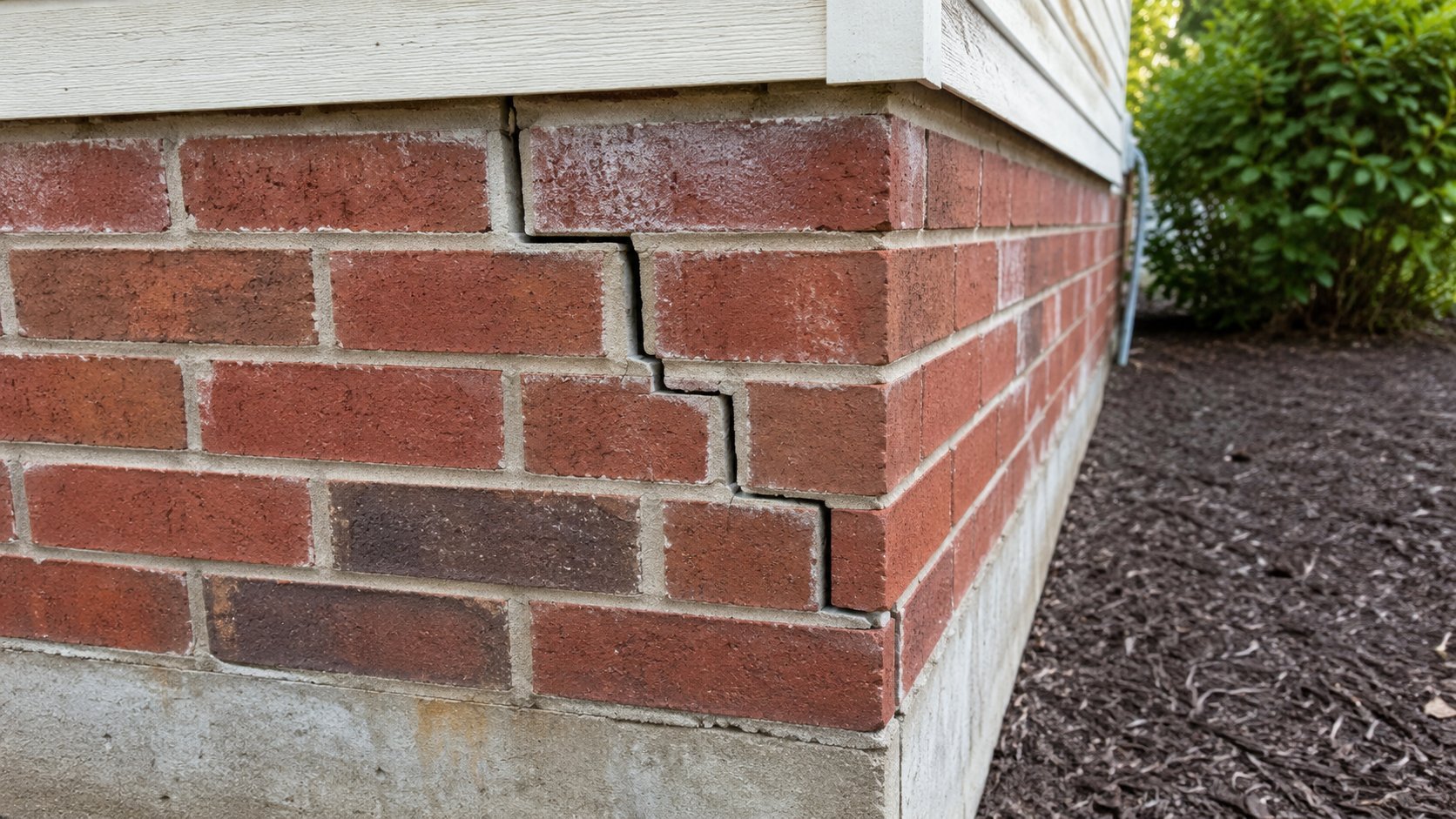
Every foundation has cracks. Concrete shrinks as it cures, houses settle, and seasons move the ground under every home in the GTA. Most cracks are the building equivalent of laugh lines. A few are the start of expensive structural problems. The difference is readable if you know what to look for, so before you panic or before you dismiss it, read your crack against this list.
Cracks that are usually fine
Hairline shrinkage cracks
Thin vertical cracks under about 3 mm wide in poured concrete, often near the middle of a wall or under a window, are usually curing shrinkage. They matter for water entry, not structure. Seal them and watch them.
Vertical cracks that never change
A stable vertical crack that has looked the same for years is telling you the settlement that caused it is finished. Mark the ends with pencil and date it. If it never grows, it has made its point.
Cracked parging over sound walls
Surface cracks in the parge coat often look alarming while the wall behind is fine. Chip a loose spot and check what the crack does underneath. If it stops at the coating, it is a parging job, which we cover in what is parging and why it cracks.
Cracks that deserve attention
Stair step cracks in brick or block
Cracks that ladder diagonally through mortar joints signal differential settlement, meaning one part of the foundation is moving relative to another. Narrow and stable can be monitored. Widening, or paired with sticking doors and sloped floors, means get it assessed.
Horizontal cracks
The serious one. A horizontal crack partway up a basement wall usually means soil or water pressure is pushing the wall inward. Block walls that bow or shear along a bed joint are structural problems today, not someday. Do not wait a season on these.
Widening, offset, or leaking cracks
Any crack that grows measurably, shows one face offset from the other, lets in water, or runs wider than about 6 mm has earned a professional opinion. So has any new crack after excavation next door, a common Toronto special.
What repair actually looks like
Matching the fix to the cause is the whole game. Non structural cracks get routed and sealed or injected against water. Failed mortar joints in block and brick foundations get repointed. Deteriorated masonry gets rebuilt, and bowing walls get reinforced or rebuilt with the pressure source corrected. Exterior grading, downspouts, and drainage almost always feature in the real solution, because water drives most foundation movement in the first place. Our concrete and foundation repair page covers the masonry side of that work.
Watch out for anyone who quotes a structural repair from a photo, and equally for anyone who sells crack injection as the answer to everything. Injection seals water paths. It does not stop a wall that is moving.
The cheap habits that protect your foundation
- Extend downspouts at least 1.5 m from the wall. Most basement moisture starts at a downspout.
- Keep grading sloped away from the house. Soil settles against foundations over the years and reverses the slope.
- Do not pile snow against the foundation, and keep salt off the parging and brick at grade.
- Photograph and date any crack you notice. A dated photo turns a guess into a trend line.
- Check the base of your walls each spring. Spalled brick near grade is an early warning, explained in why bricks crumble.
Frequently asked questions
When should I worry about a foundation crack?
Worry about horizontal cracks, widening cracks, offset faces, cracks over 6 mm, and stair step cracks paired with sticking doors or sloping floors. Thin, stable, vertical cracks are usually low risk.
Are stair step cracks always serious?
No. Narrow, stable stair step cracks are common in older brick and block. They become serious when they widen, repeat after repair, or come with other movement signs. Monitoring with dated photos sorts one from the other.
Can I just fill a foundation crack with caulking?
For a hairline shrinkage crack, a proper masonry sealant keeps water out and that is often enough. Filling a moving crack does nothing about why it is moving, and the crack simply reopens beside the fill.
What does foundation crack repair cost in Toronto?
Sealing or injecting a simple crack typically runs a few hundred dollars. Repointing and masonry repair on block or brick foundations scales with area, and structural work is priced after an assessment. An honest contractor tells you which category you are in before quoting.
Do all foundation cracks leak eventually?
No, but any crack through the wall is a potential water path, and Toronto freeze and thaw cycles widen paths over time. Sealing sound cracks early is cheap insurance against a wet basement later.
Found a crack you cannot read? Brick Aid Masonry assesses foundation and masonry cracks across Toronto and the GTA for free, tells you honestly which ones matter, and fixes the ones that do. 2 year workmanship warranty.
Book a free assessment