
7 Signs Your Mortar Joints Need Repointing
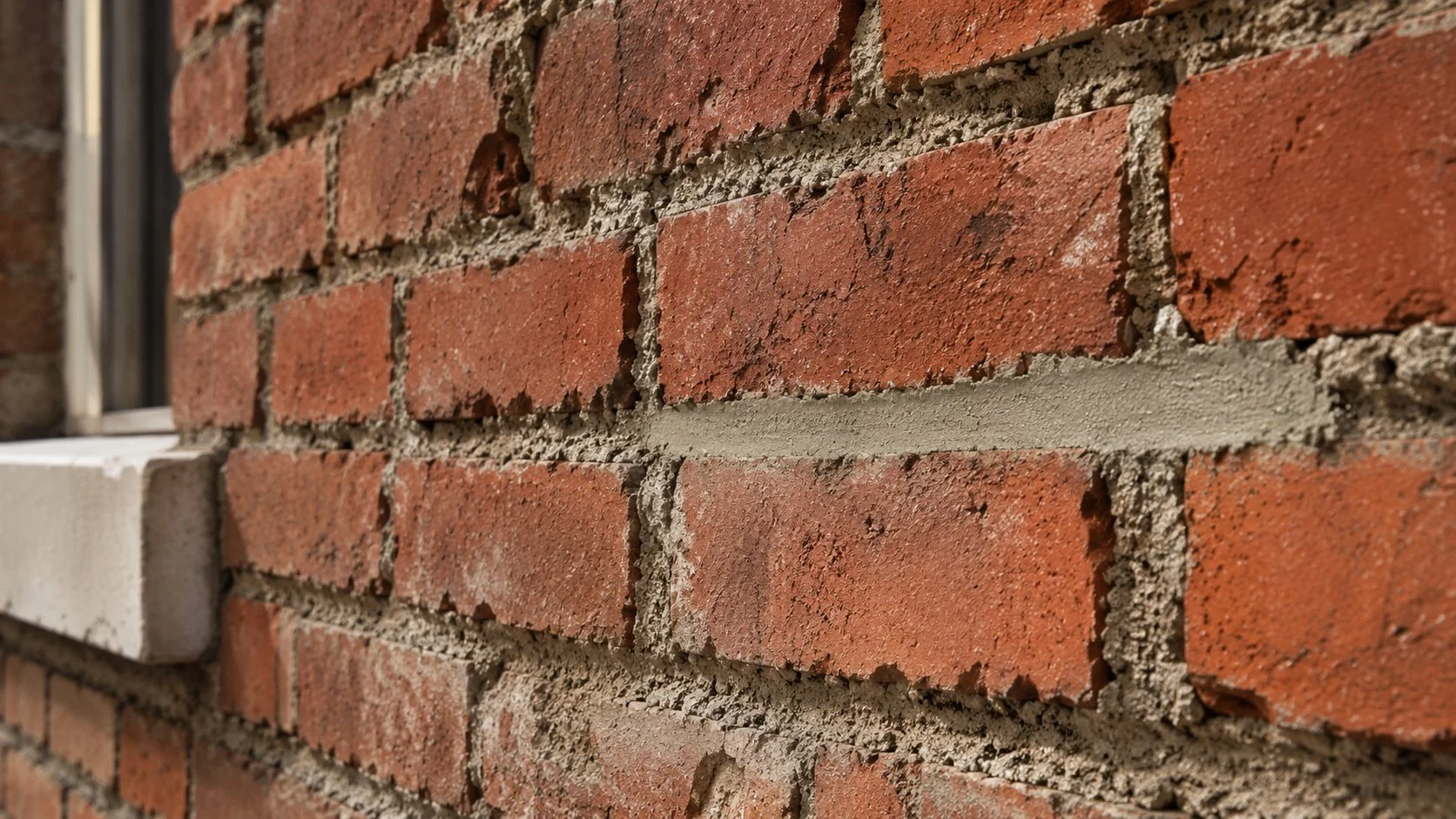
Mortar is the part of your wall that is designed to wear out. It is softer than the brick on purpose, so it absorbs the stress and sacrifices itself over the decades. That works well right up until the joints fail and start letting water in. Here are the seven signs that your mortar joints are done, and what happens if you leave them.
The seven signs
1. Joints you can scratch out with a key
Run a key or screwdriver along a joint. Healthy mortar resists. If it powders or flakes away with light pressure, the binder has broken down and the joint no longer sheds water.
2. Recessed joints
Compare the mortar depth to the face of the brick. Joints that have worn back more than about 6 mm create little shelves that hold water against the brick. On many Toronto homes you see this first on the weather side, usually the west and south faces.
3. Cracks between brick and mortar
Hairline separation lines where mortar meets brick are open doors for water. They are easy to miss from the sidewalk. Get close and look along the wall at a low angle in raking light.
4. White staining on the wall
That white crust is efflorescence, mineral salts carried out of the wall by water. It means moisture is moving through your masonry. The stain itself is cosmetic. What it tells you is not.
5. Crumbling or spalled brick faces
When joints fail, water soaks the brick and winter freeze and thaw cycles pop the faces off. Once brick starts spalling you are past repointing alone and into brick replacement. Our post on why bricks crumble covers this stage.
6. Damp patches or musty smells inside
Moisture on interior walls that line up with exterior masonry often traces back to failed joints, especially around chimneys and parapets. People chase these leaks through roofers first and find the mason last.
7. Previous patch jobs that are failing
Smeared surface patches over old joints fail fast because they bond poorly and trap moisture behind them. If your wall has patches on patches, proper repointing is overdue.
What repointing actually involves
Proper repointing is not smearing new mortar over old joints. The failed mortar gets ground or raked out to a sound depth, usually around 20 mm or more. The joint gets cleaned, dampened, and packed with fresh mortar matched to the original in strength and colour, then tooled to the right profile. Done right, repointing lasts decades. Our tuck pointing page explains our process.
Mortar match matters more than most people realize. Toronto homes built before the 1930s typically used soft lime mortar. Filling those joints with hard modern cement mortar forces the stress into the brick itself, and the brick loses. That is how a cheap repointing job creates spalling a few winters later.
What it costs and what waiting costs
Repointing in the GTA runs about $10 to $25 per square foot, and tuckpointing with its finer finish runs $15 to $30. Full perimeter repointing on a detached home usually lands between $3,000 and $6,000. The full breakdown is in our tuckpointing cost guide.
The math on waiting is simple. Open joints let water in. Water plus Toronto winters equals spalled brick, and brick replacement costs several times what repointing does. Catch it at the joint stage and you fix it once.
Can you repoint it yourself?
Small ground level sections are a realistic DIY job if you match the mortar and take your time. The failure points are grinding into the brick edges, using premixed mortar that is too hard, and working in the wrong weather. Anything structural, anything above one storey, and anything on an older home is worth handing to a pro. A free assessment costs you nothing either way. Book one through our contact page.
Frequently asked questions
How often does brick need repointing?
Mortar joints typically last 25 to 50 years depending on exposure, mortar quality, and drainage. The weather side of a house fails first, so different walls of the same home can be decades apart.
What is the difference between repointing and tuckpointing?
Repointing replaces failed mortar. Tuckpointing is a finer decorative version that uses two mortar colours to create crisp thin joint lines. In everyday Toronto usage the words get swapped around, so confirm the scope in writing.
Can you repoint in winter?
Not reliably. Mortar needs sustained above freezing temperatures to cure. The season in the GTA runs roughly April to November. Heated hoarding makes winter work possible on commercial jobs but rarely makes sense on a house.
Does repointing stop leaks?
If failed joints are the entry point, yes. Water can also enter through chimney crowns, flashing, sills, and parapets, so a proper assessment looks at the whole wall assembly rather than just the joints.
Will new mortar match my wall?
Fresh mortar always looks brighter at first and blends as it cures and weathers. A good mason matches sand colour, joint profile, and mortar strength so the finished wall reads as one surface within a season.
Not sure what stage your wall is at? Brick Aid Masonry gives free on site assessments across Toronto and the GTA and tells you honestly whether you need repointing, repair, or nothing yet. Backed by a 2 year workmanship warranty.
Book a free assessment