
Brick Step Repair: When Loose Treads Need More Than New Mortar
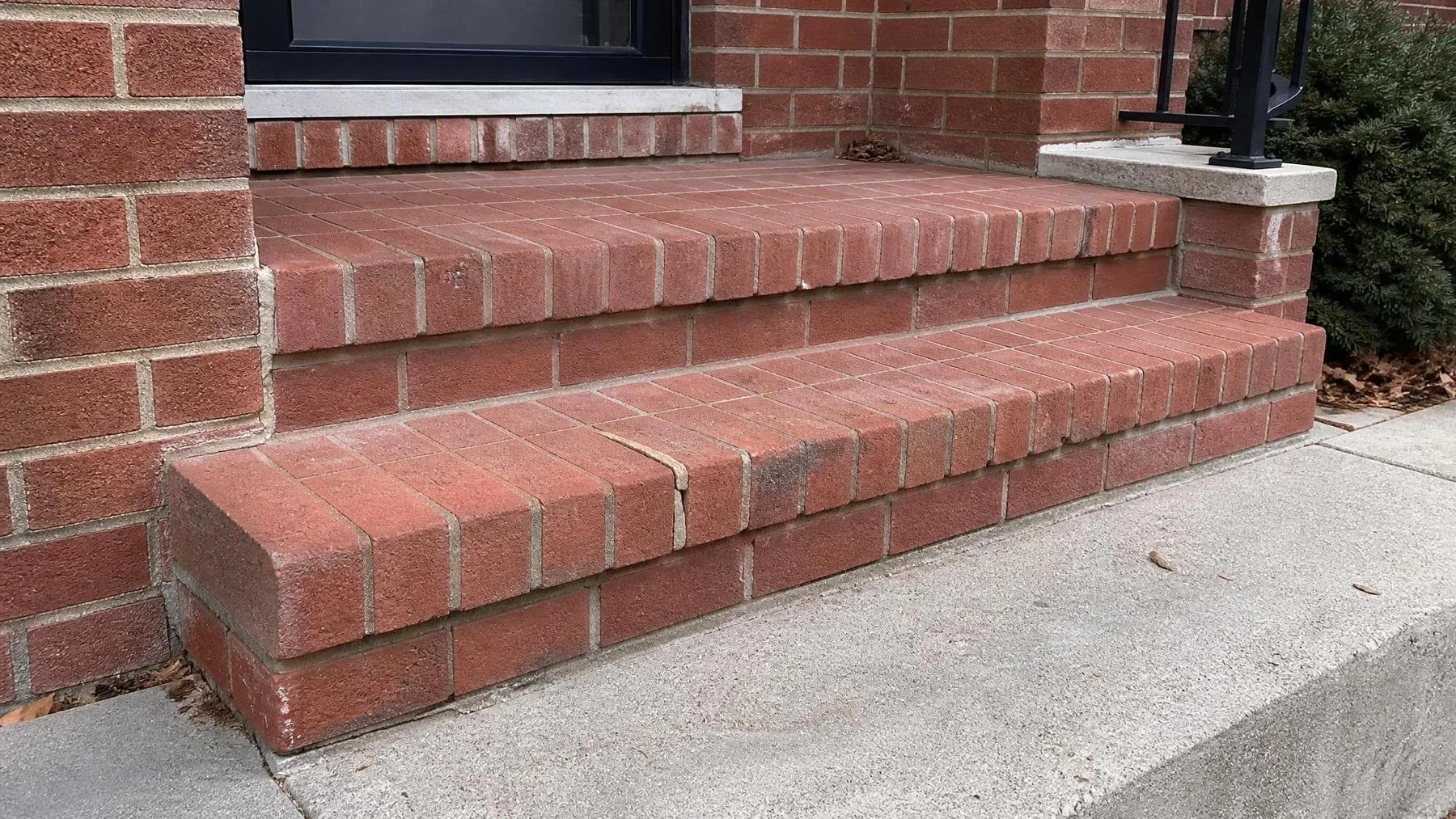
If a brick tread is loose, stop using the affected path when safe access cannot be maintained and do not load or pry the unit to test it. A contractor should determine whether the failure is limited to the bedding mortar or involves the base, riser, sidewall, rail connection or landing.
Do not load a loose tread to diagnose it
A loose tread may have failed mortar beneath it, but movement can also come from a settled base, water entry, corroded metal, or a cracked support. Pressing new mortar around a moving unit rarely defines the real repair.
Inspect from the top down
Check tread slope, open perimeter joints, cracked units, rail connections, and the landing. Then inspect the sides for bulging, missing mortar, and gaps where water enters. A pattern across several steps requires assessment of the wider support.
Choose local repair or rebuilding
One sound unit with a failed bed may be reset. Multiple displaced treads, loose risers, or a moving sidewall may require dismantling to stable work and rebuilding that section. The repair should restore consistent rise, run, bearing, and drainage.
Make safety part of the quote
The proposal should address access during work, temporary rail conditions, damaged units, base repairs, joint finish, curing, and cleanup. Brick Aid can inspect brick steps and provide a repair boundary you can verify.
Protect access and define the repair boundary
- Protect the route around a loose or unstable tread
- Check bedding, base, riser, sidewall and landing
- Confirm step geometry, rail work and curing access
Assessment starts with protected access and a visual record of each unit, joint, slope and connection. One loose but intact tread over stable support may permit a local reset. Similar movement across several steps does not prove one cause. It requires a wider assessment of support and water entry. Any rebuild scope should state how consistent geometry, drainage, rail conditions and curing protection will be checked.