
Bulging Brick Wall: What to Do Before Anyone Repoints It
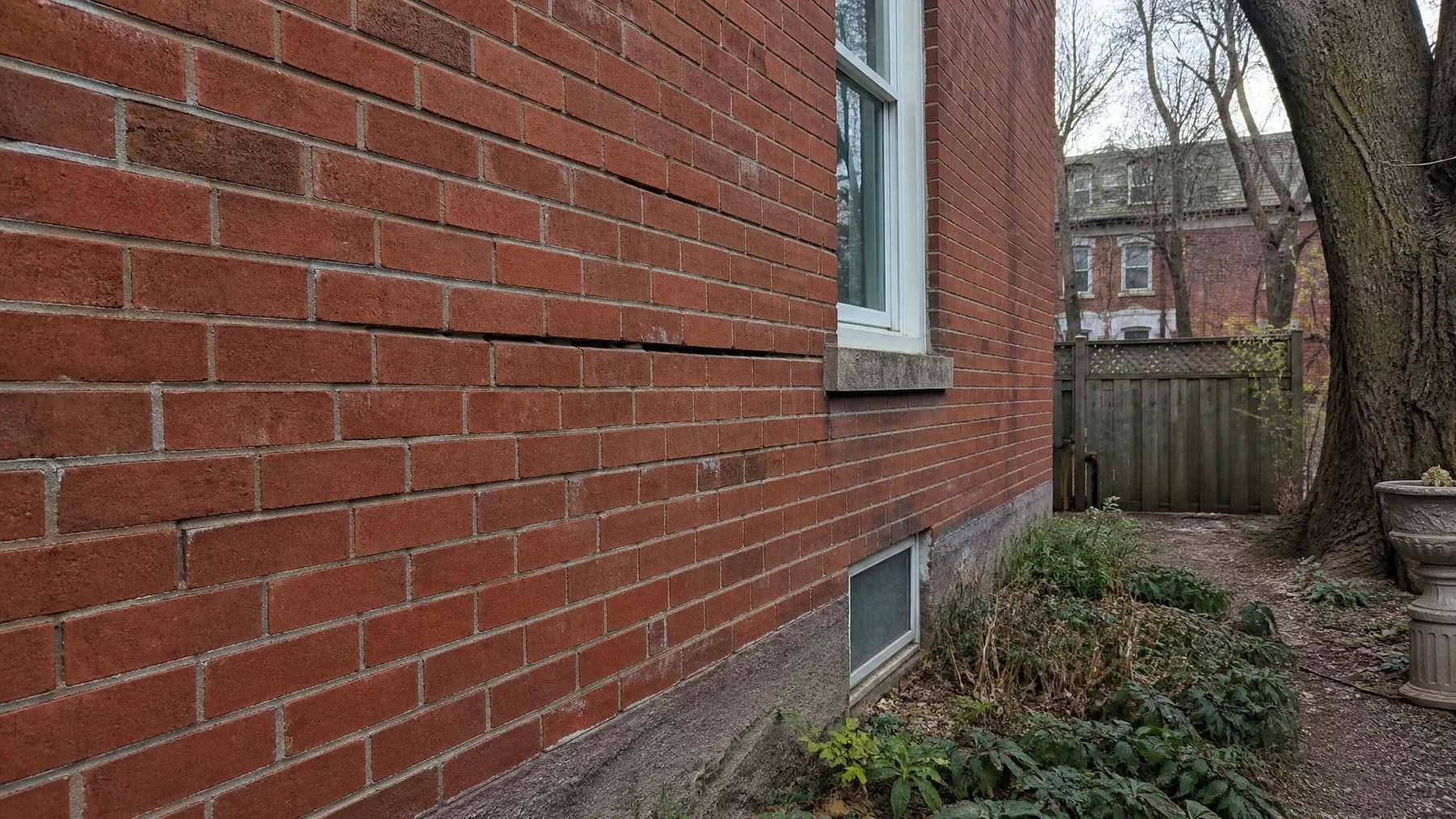
Keep people and vehicles away from an out of plane brick wall when units are loose, material is falling or the shape appears to be changing. Do not remove bricks or probe an unstable area. Arrange a professional assessment before repointing or exploratory openings.
Keep people away from a changing wall
A visible bulge is an area of the wall that sits out of plane. If units are loose, the shape is changing, or material is falling, restrict access below it and arrange an urgent professional assessment. Do not remove bricks to investigate an unstable area.
Repointing cannot pull a wall back
Fresh joints can improve weather resistance where masonry remains stable. They do not reconnect a detached veneer, correct failed support, or reverse displacement. The cause and stability must be established before cosmetic work.
The investigation extends beyond the face
An assessor may need to examine wall ties, shelf angles, backing, openings, roof drainage, previous repairs, and interior conditions. Photographs and measurements help track whether movement is active and define where exploratory openings may be justified.
Require a designed repair boundary
The final scope should state temporary protection, investigation, support, dismantling limits, tie or support work, rebuilding, mortar compatibility, and inspections. Brick Aid can complete the masonry portion once the structural boundary is clear.
Hand the assessor a useful record
Record the wall plane from a protected location
The visible face does not establish whether the wall is a veneer, multi wythe solid masonry or another assembly. The assessor may review ties, backing, shelf angles, openings, support and drainage, then decide whether measured monitoring or controlled openings are justified. Fresh mortar cannot reconnect a detached veneer or restore failed support. Brick Aid can carry out a defined masonry repair after the structural responsibility, temporary protection and dismantling boundary are documented.