
Spalling Chimney Bricks: Find the Water Source Before Repair
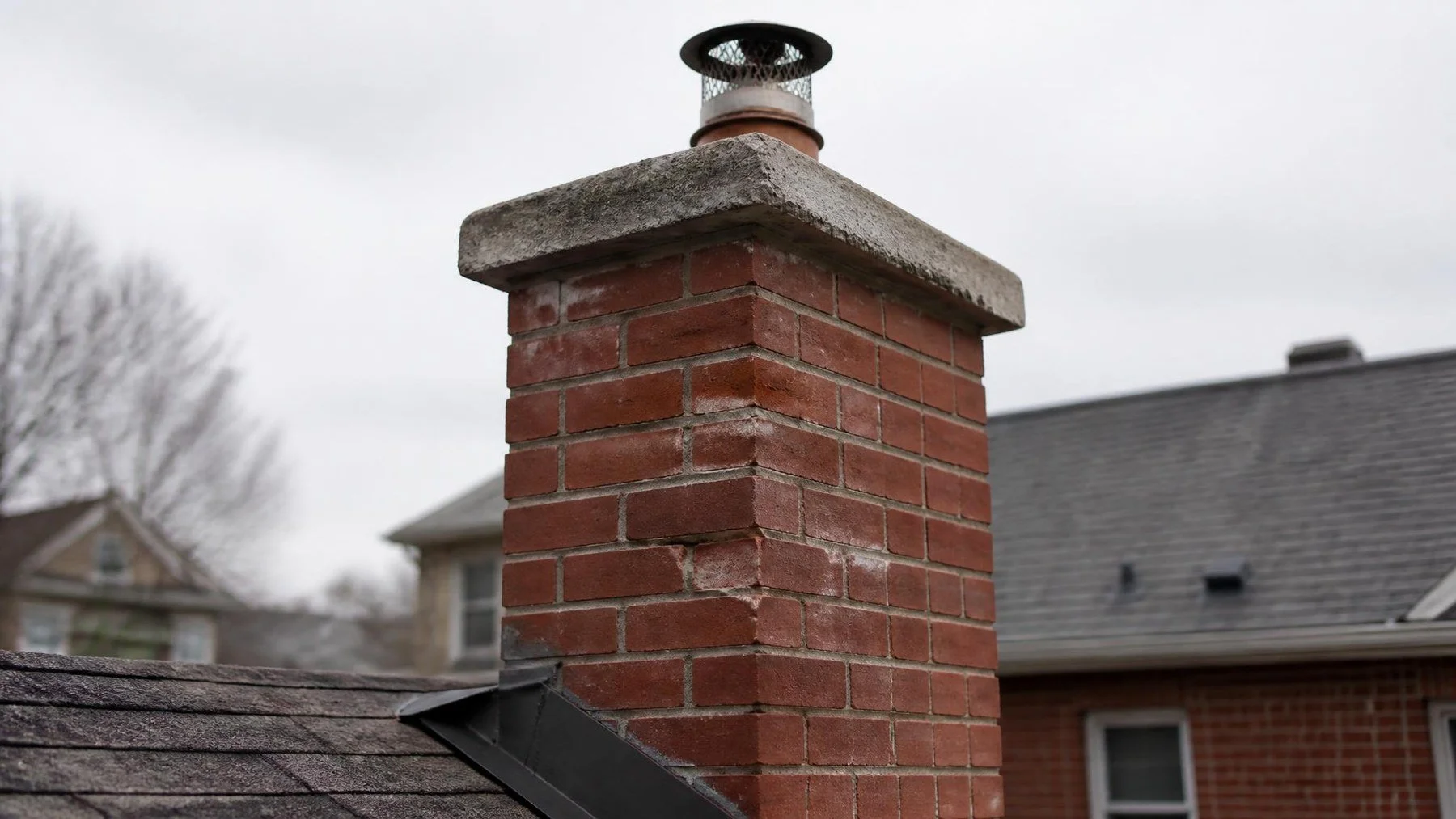
Map damaged chimney brick from safe access, then investigate why water reached those units. A qualified professional can inspect and, where appropriate, sound the masonry. Homeowners should not climb, tap loose work or disturb top courses. The map defines repair extent, while the cap, crown, flue joints, flashing and venting review looks for contributing water paths.
Start above the damaged brick
A chimney receives rain, snow, wind, and repeated freezing from every side. When brick faces break away, inspect the cap, crown, flue joints, flashing, mortar, and roofline before selecting replacement units. The highest visible damage is not always the entry point.
Map the depth of deterioration
Tap and visual checks can identify loose faces, but a repair also needs the condition behind them. Mark each failed unit and open joint. Wider movement, cracked flues, or loose top courses changes the scope.
Replace failed units without trapping moisture
New brick and mortar should suit the surviving chimney masonry. Repointing alone cannot restore units that have lost their face or core. Coatings should not substitute for correcting crown, flashing, or joint defects.
Assign each water entry point to the repair scope
Ask for photographs before, during, and after work. The proposal should separate crown repair, brick replacement, repointing, flashing coordination, and cap work. Brick Aid can inspect and repair the masonry portion of Toronto chimneys.
Keep the damage map separate from the water investigation
| Inspection record | Repair boundary to confirm |
|---|---|
| Location of damaged brick faces | Which units need replacement, and which sound units will remain? |
| Open mortar joints | Which areas need repointing in addition to brick replacement? |
| Water entry above the damaged area | Does the crown need repair, or is a cap, flashing or venting referral needed? |
Record lost faces, cracks, open joints and loose units separately. Replacement is usually considered where a unit has lost material that repointing cannot restore, while sound units and mortar should remain. Keep the proposal divided into brick replacement, repointing, crown or cap work, flashing coordination and any venting referral. That separation prevents a broad water diagnosis from turning into an undefined chimney rebuild.