
Chimney Crown Repair: Seal a Crack or Replace the Crown?
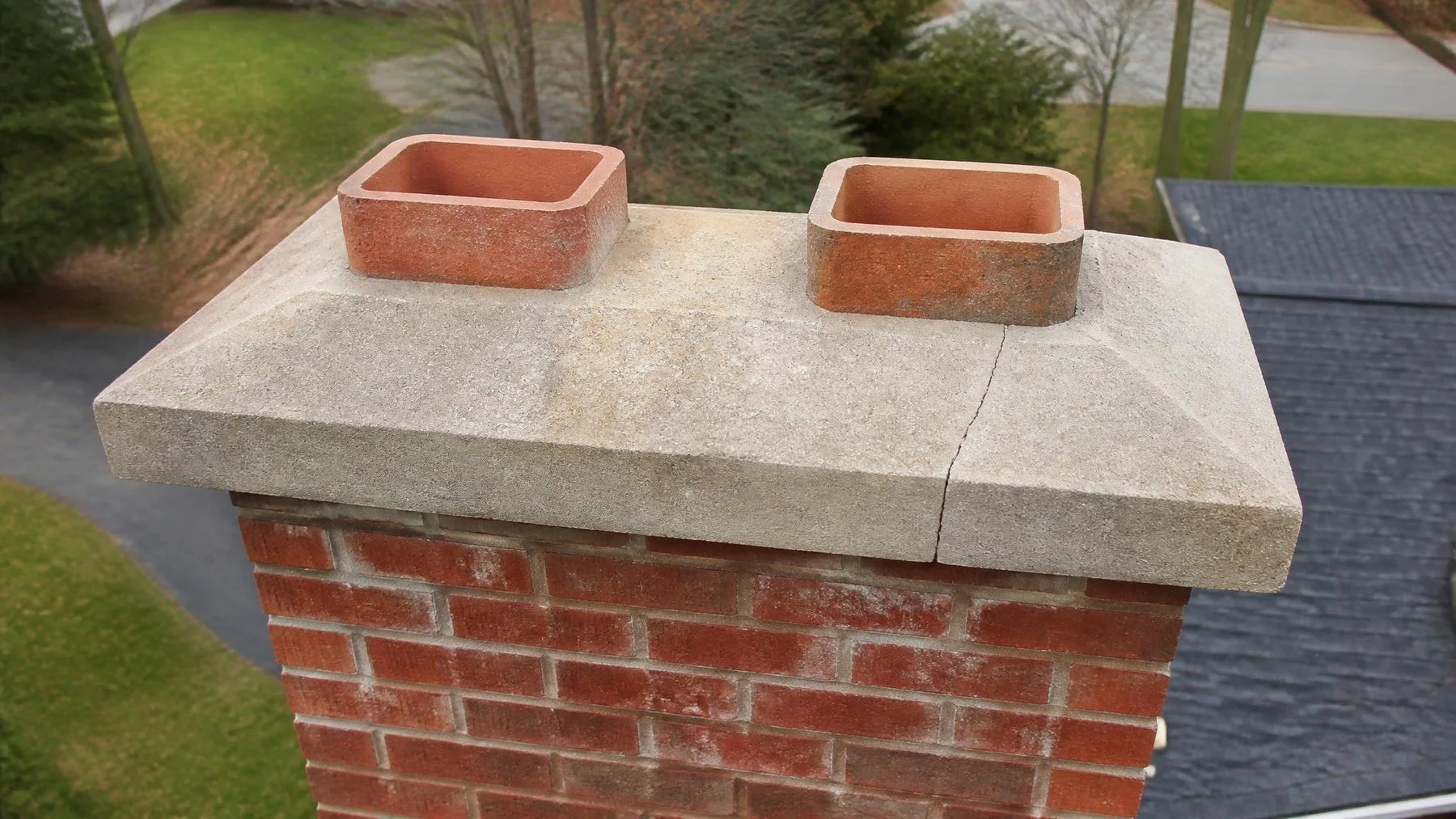
A crack across a chimney crown raises a practical choice: repair the crack, resurface a stable crown, or replace a crown that no longer sheds water. The visible width alone does not decide it. A useful assessment records slope, edge projection, loose material, the joints around every flue and the condition of the masonry below.
Decide from the crown as a whole
A narrow surface crack does not automatically mean the entire crown needs replacement. The decision depends on whether the crown still sheds water, whether pieces are loose, and whether cracks run through its full depth. Check the perimeter, the joint around each flue, and the underside where it can be seen safely.
A sound crown with limited shrinkage cracking may suit cleaning and a compatible repair. A crown that is loose, deeply split, flat, or breaking away at the edges usually needs removal and replacement. A coating cannot correct movement or inadequate slope.
Water shedding is part of the repair
A replacement crown should direct water away from the chimney face. Its edge, slope, thickness, and separation from the flue liners all affect that job. The repair scope should also address failed sealant around the flues instead of bonding the crown rigidly to them.
Ask the mason to photograph the top before quoting. The photo should show the full crown, each flue, the edges, and any low areas where water sits. That evidence makes a repair proposal easier to compare.
Check the masonry below
Spalled brick or open joints below the crown can point to a longer water path. The crown may be one source, but flashing, caps, and porous masonry can contribute. A useful chimney inspection follows the water from the top down before deciding where the repair ends.
Choose a scope that can be verified
For a crack repair, the quote should name the preparation, repair material, and limits. For replacement, it should describe removal, protection of flues, new crown geometry, curing, and cleanup. Brick Aid Masonry can inspect the chimney and provide a written scope for chimney repair in Toronto and the GTA.
Compare the evidence before choosing the crown scope
| Observed condition | Question for the inspection |
|---|---|
| Crack across the crown or loose edges | Is the defect confined to the surface, or does it extend through the crown? |
| Low areas or damaged perimeter | Does the crown shed water beyond the brickwork? |
| Joint around a flue liner | How will the proposed repair preserve separation between the liner and crown? |
Ask for photographs taken from safe access, not a ground level guess. The record should show whether the defect is isolated or crosses the crown, whether water can pond, and whether the crown is bonded tightly to a flue liner. A coating cannot correct movement or inadequate slope. When replacement is proposed, the quote should describe the intended water shedding geometry and how the flues remain separated from the crown.