
Chimney Flashing Leaks: Where the Water Actually Gets In
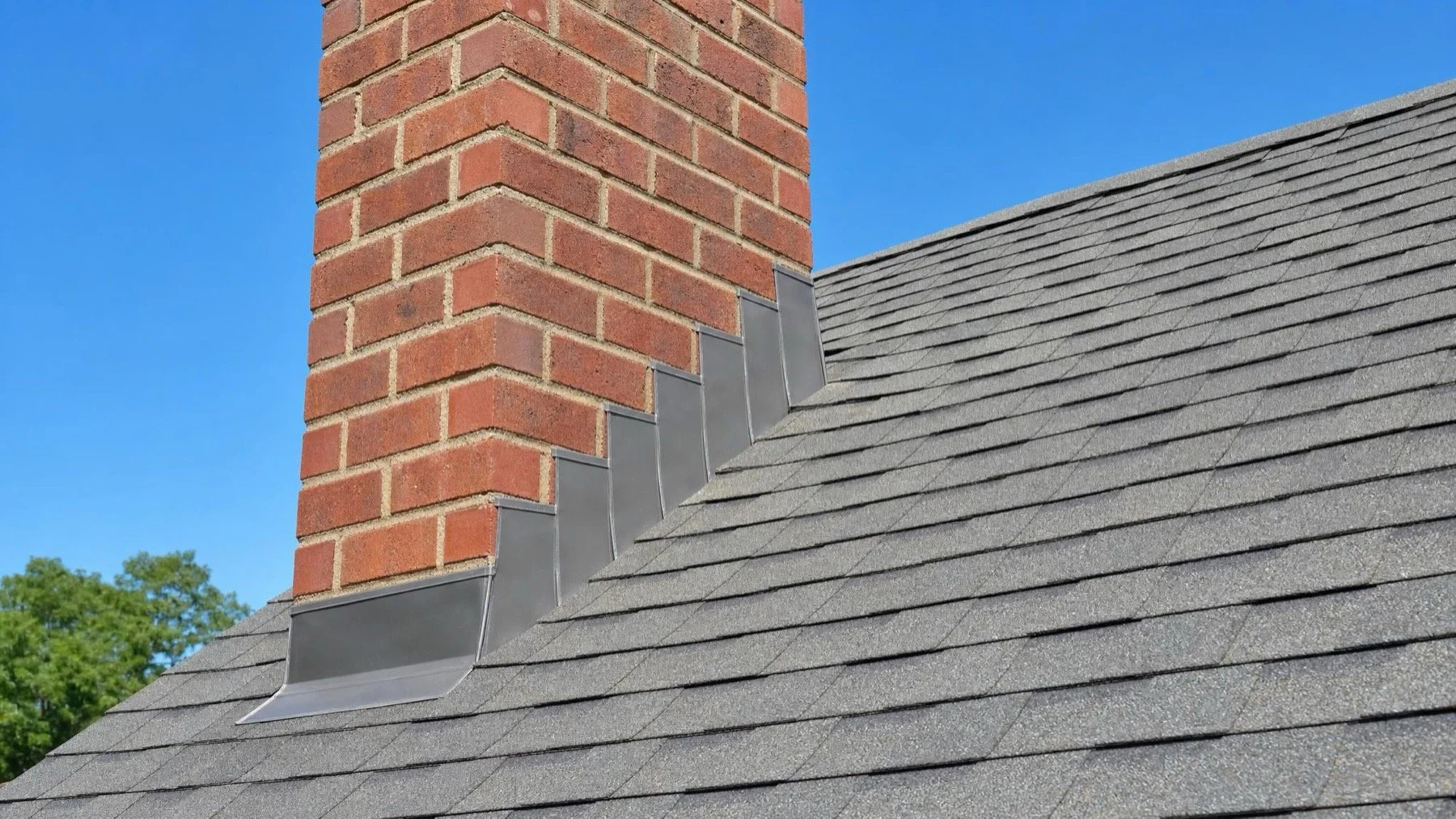
A chimney is a hole cut through a roof with masonry built into it. The masonry is rarely the weak point.
The joint where the two meet is, and that joint is made of metal, not brick.
Start with the joint, not the brick
Water reaching a ceiling near a chimney has usually entered along the roof line rather than through the stack. The masonry above the roof sheds most weather. The intersection has to be flashed to handle the rest.
What to look at first
- The metal running up the sides of the chimney in a stepped pattern
- Where that metal tucks into a mortar joint on the brick
- The apron across the low side and the saddle on the high side
- Any sealant that has been used to patch a previous failure
Know that flashing is two layers
Proper flashing is a pair. Step flashing weaves in with the shingle courses and turns up against the brick. Counter flashing is let into a mortar joint above it and laps down over the step flashing, so water running down the brick is directed onto the roof rather than behind it.
One layer without the other does not work. Metal turned up against brick with no counter flashing lets water track down the wall face and straight behind it. Counter flashing alone has nothing to shed onto.
The tell of a bad repair. A thick bead of roofing tar or caulk smeared along the joint means someone treated a flashing problem as a sealant problem. It buys a season or two and hides the condition underneath.
Compare the common failures
| What you see | Likely cause | Repair |
|---|---|---|
| Rust staining at the joint | Old galvanised flashing corroding | Replace flashing, repoint the reglet |
| Counter flashing pulling out | Mortar joint eroded | Cut a new reglet, rebed and repoint |
| Tar patch over the joint | Previous sealant repair failing | Strip back, install two layer flashing |
| Leak on the high side only | No saddle or cricket behind chimney | Build a saddle to divert water |
| Staining with no flashing damage | Crown or cap failure above | Address the crown, then reassess |
The fourth row catches people out. On a wide chimney set below the ridge, water runs down the roof and piles against the back of the stack. Without a saddle diverting it, no amount of flashing work on the sides will stop the leak.
Check the crown and the cap as well
Flashing handles the roof intersection. The top of the chimney has its own defences, and when those fail the water arrives from above and shows up in the same place.
Above the roof line
- A cracked or missing crown letting water into the masonry core
- No rain cap, so water enters the flue directly
- Open joints in the courses above the roof
- Spalled brick shedding face material onto the roof
Deciding whether the stack needs repair or rebuilding is covered in our guide to chimney repair versus rebuild.
Get the repair sequence right
Order matters because each step covers the one before it. Address the crown and any failed masonry first, then install flashing, then reinstate roofing. Flashing installed before the masonry is sound has to come off again.
This is also the point where two trades meet. The reglet has to be cut and repointed by someone who works in masonry, and the shingle interface has to be handled correctly. Work carried out on the roof alone tends to stop at sealant.
Chimney work and pricing detail sits on our chimney repair and rebuilds page, with figures in our chimney rebuild cost guide.
Photograph the leak during rain if it is safe. The timing of the first drip and the wind direction help distinguish flashing entry from water travelling through masonry higher up.
Frequently asked questions
How do I know if my chimney leak is the flashing or the brick?
Flashing leaks usually appear at the ceiling near the roof line and worsen with wind driven rain. Masonry leaks tend to show higher, around the stack itself, and are often accompanied by open joints or spalled brick above the roof.
Can chimney flashing be sealed instead of replaced?
Sealant is a short term measure at best. It sits over the joint rather than shedding water out of it, and it fails as it ages and moves. A two layer step and counter flashing detail is the durable repair.
What is a chimney saddle and do I need one?
A saddle, sometimes called a cricket, is a small raised structure behind a chimney that diverts water around it. Wide chimneys set below the ridge generally need one, because water otherwise collects against the back of the stack.
Should the roofer or the mason do the flashing?
It sits between the two. The counter flashing has to be let into a mortar joint and repointed, which is masonry work, while the step flashing integrates with the shingles. Repairs done by one trade alone often stop at sealant.
Why does my chimney leak only in heavy wind?
Wind driven rain travels sideways and gets under laps that shed fine in vertical rain. A leak that only appears in storms usually points to flashing laps or a missing counter flashing rather than an open hole.
Stop the leak at the joint that causes it
Brick Aid Masonry cuts and repoints the reglet, installs two layer flashing, and addresses the crown in the right order. Free on site assessments across Toronto and the GTA with a 2 year workmanship warranty. Call (647) 271-2697 or book a free assessment.