
Brick Veneer or Solid Masonry? How to Tell What You Have
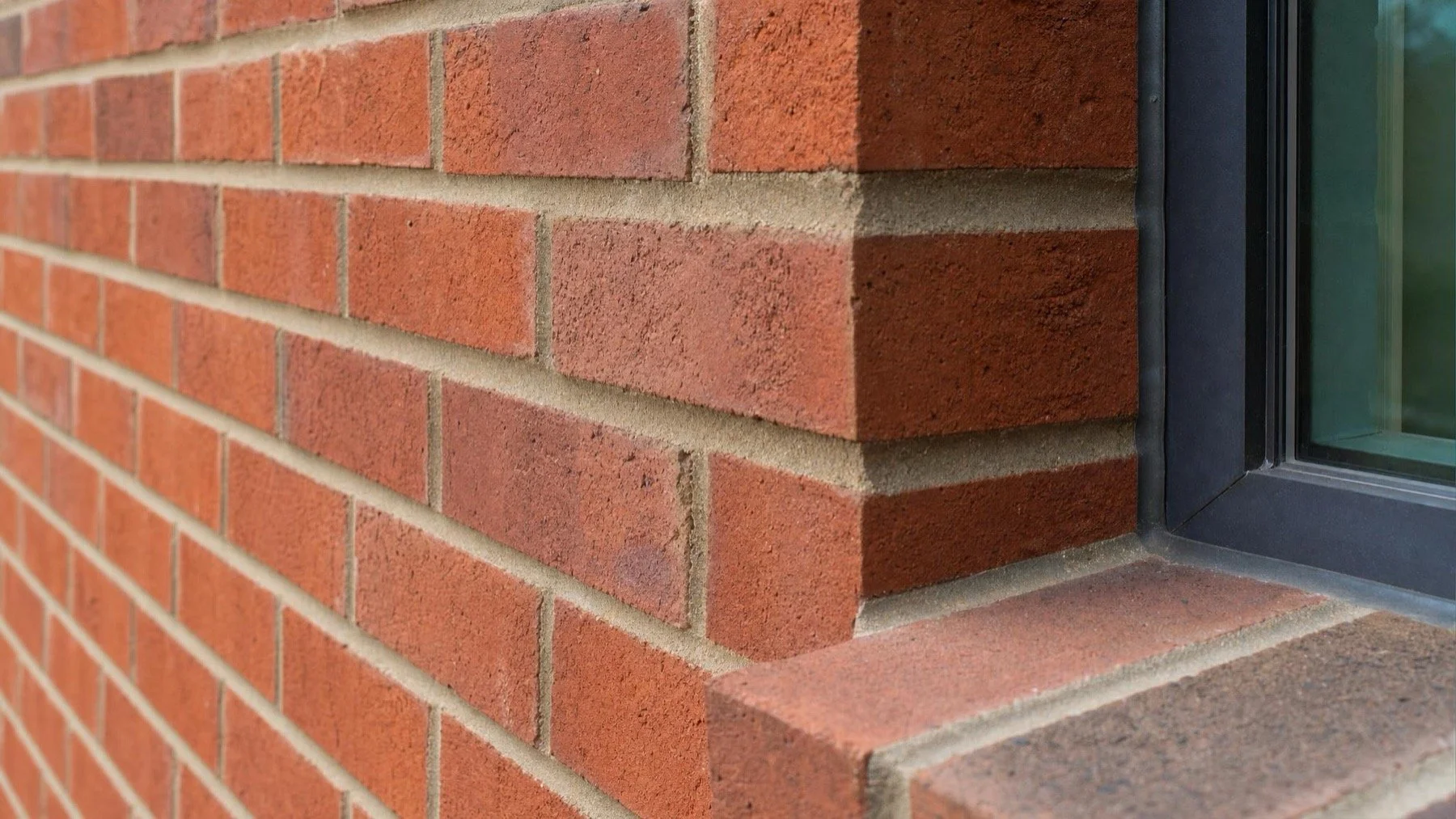
Two houses on the same street can look identical from the sidewalk and be built completely differently behind the brick.
One carries its own weight in the masonry. The other hangs a single skin of brick in front of a frame. Which one you own changes what every crack means.
Start at a window or door opening
The reveal at an opening is the easiest read available without opening anything up. Measure from the outside face of the brick to the window frame.
What the depth tells you
- Roughly the depth of a single brick: almost certainly veneer
- Two brick widths or more: likely solid masonry
- Deep sill and a visible arch or stone head: strong solid masonry indicator
Age helps confirm it. Toronto homes built before roughly the 1950s are commonly solid masonry. Post war construction moved steadily to veneer over frame.
Read the bond pattern
Solid masonry has to tie its two or more wythes together, and it does that with header bricks laid end on. Look for a course where the short ends of the brick appear at regular intervals through an otherwise running pattern.
Veneer has no second wythe to tie into, so it is laid in a continuous running bond with no headers at all. It is anchored back to the frame with metal ties you cannot see. A wall with no header course anywhere on the elevation is very likely veneer.
One caution. Some veneer walls include decorative header courses purely for appearance. Use the bond pattern alongside the reveal depth and the age rather than on its own.
Compare how the two wall types behave
| Solid masonry | Brick veneer | |
|---|---|---|
| Structure | The brick carries load | The frame carries load |
| Water handling | Absorbs and dries through the mass | Drains down a cavity and out weep holes |
| Common failure | Mortar erosion, spalling, movement | Tie corrosion, blocked drainage, cracking |
| Repointing mortar | Must be soft and lime rich on older walls | Modern mortar usually appropriate |
| Removing brick | Structural, needs support | Non structural but needs re anchoring |
The mortar row is the one that ruins walls. Repointing a soft old solid wall with hard modern cement forces stress and moisture through the brick instead of the joint, which is the mechanism behind much of the spalling covered in our post on why bricks crumble.
Know why it changes every repair
On veneer, a cracked wall is usually a movement or drainage question and the fix protects the frame behind it. Blocked drainage is a leading cause, which is why weep holes matter so much on this wall type.
On solid masonry, the same crack may be structural because the brick is the structure. Mortar selection, unit hardness and the sequence of work all change, and the cost changes with them.
A quote that does not name which wall type it is pricing has not established the scope of the work.
Confirm it before anyone quotes
A mason can confirm the wall type in minutes on site by reading the reveal, the bond, the wall thickness at a basement window head and the construction era together.
Ask for that determination in writing as part of the assessment. It sets the mortar specification, the support requirements and the drainage approach for everything that follows. General remedial work is covered on our masonry repair page and unit replacement on brick repair and restoration.
Frequently asked questions
How do I know if my house is brick veneer or solid brick?
Measure the reveal at a window. Roughly one brick depth suggests veneer, two or more suggests solid masonry. Then look for header bricks laid end on, which appear in solid walls and are usually absent in veneer.
Is brick veneer weaker than solid masonry?
It is not weaker as a house, because the frame behind it carries the load. The brick skin itself is non structural, so it depends on ties and drainage rather than mass, and it fails in different ways.
Can you remove brick from a veneer wall safely?
Yes, with care. It is not carrying load, but the surrounding units still need support during the work and the replacement has to be re anchored properly. On solid masonry the same opening needs structural support first.
Does the wall type change what mortar should be used?
Significantly. Older solid masonry usually needs a soft lime rich mortar so the joint stays weaker than the brick. Hard modern mortar on those walls drives stress and moisture into the units and accelerates spalling.
Why does my veneer wall have gaps in the mortar near the bottom?
Those are probably weep holes rather than defects. They let water that has entered the cavity drain out. Filling them traps water against the frame and is one of the more damaging things you can do to a veneer wall.
Get the wall type confirmed before you get a price
Brick Aid Masonry identifies your wall construction on site and scopes the mortar, support and drainage to match it. Free on site assessments across Toronto and the GTA with a 2 year workmanship warranty. Call (647) 271-2697 or book a free assessment.
/