
Weep Holes: What They Do and Why You Must Not Block Them
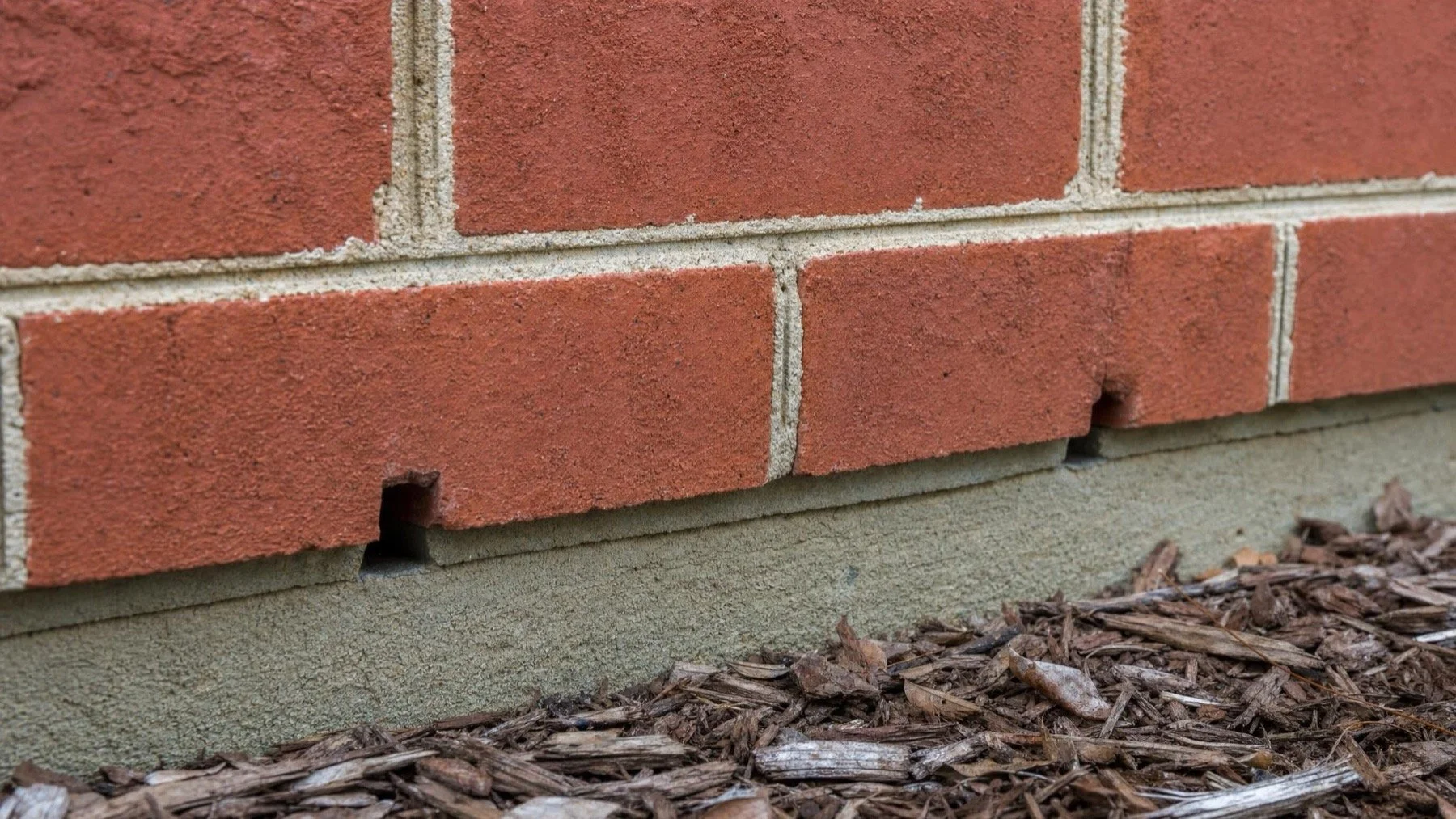
Every few bricks along the bottom course of a veneer wall there is a gap where mortar should be.
It looks like sloppy work. It is drainage, and it is the only route water inside the wall has to get back out.
Start with the cavity behind the brick
A brick veneer wall is one skin of masonry standing in front of the structure with an air space behind it. Brick is porous, so driving rain passes through it. The wall is designed on the assumption that it will.
Water that gets through runs down the back face of the brick, lands on flashing, and travels out through the weep holes. Remove that exit and the water sits on the flashing against the framing behind it.
Where the openings appear
- The bottom course, just above grade or above the foundation ledge
- Directly above windows and doors, over the lintel flashing
- Above shelf angles on taller walls
- Anywhere flashing interrupts the cavity
Find them before you judge them
Weep holes take several forms. An open head joint with no mortar is the most common. Some walls use short plastic tubes, some use rope wicks, and newer work often uses moulded vents that sit flush in the joint.
They are easy to lose. Landscaping raises grade over the bottom course, paint fills them, a previous repoint closed them, or mulch and soil simply bury them.
The rule worth remembering. If a gap sits directly above flashing, in a line with others, at a regular spacing, it is drainage. Mortar that has simply fallen out is irregular and does not repeat on a pattern.
Know what blocking them changes
| Blockage | How it happens | What follows |
|---|---|---|
| Grade raised | Soil or mulch added over the course | Water backs up, saturates the base |
| Repointed shut | Mistaken for missing mortar | Cavity holds water against sheathing |
| Painted over | Full elevation coating | Drainage closed across the wall |
| Foam or caulk | Pest control measure | Trapped moisture, no ventilation |
| Debris in cavity | Mortar droppings during build | Blocked from inside, invisible outside |
The last row is the one you cannot see. Mortar squeezed out during construction can fall into the cavity and dam the drainage path behind an entirely open looking weep hole.
Keep pests out without closing the drainage
The usual reason people fill weep holes is insects, and it is a fair concern. The answer is a vent designed for the job rather than sealant.
Purpose made weep vents fit the joint and carry a baffle or mesh that blocks insects while leaving the drainage and airflow path open. They cost very little and install during a repoint.
Foam, caulk and packed mortar all stop the wall working. If someone proposes sealing the openings to solve a pest problem, that is the point to ask what happens to the water.
Call for an inspection when water persists
Blocked drainage rarely announces itself directly. It shows up as damp at the base of a wall, staining inside, recurring efflorescence on the brick, or corrosion around lintels.
Opening a joint you can see does not fix flashing that has torn or a cavity dammed with mortar droppings. Those need investigation, and on some walls a small section has to come out to confirm the condition.
Whether your wall even has a cavity depends on how it was built, which our guide to veneer against solid masonry covers. Remedial work sits under masonry repair.
Frequently asked questions
Should brick weep holes be filled in?
No. They are deliberate drainage openings in veneer walls and they need to stay open. Filling them traps water on the flashing against the structure behind the brick, which is the damage they exist to prevent.
How do I tell a weep hole from missing mortar?
Weep holes repeat at regular spacing and sit directly above flashing, usually in the bottom course and above openings. Mortar that has simply eroded is irregular, appears at random heights and does not follow a pattern.
Can mice or insects get in through weep holes?
Small pests can investigate them. The correct answer is a purpose made weep vent that blocks insects while leaving drainage and airflow open, not sealant, foam or packed mortar.
Why is water coming out of my weep holes?
That is the wall working as designed. Water that got through the brick is draining out. Heavy or constant discharge in dry weather is different and worth investigating, because it suggests water entering from somewhere other than rain.
Do solid brick walls have weep holes?
Generally not in the same form. Solid masonry manages water by absorbing and drying through its mass rather than draining a cavity. Confirm which wall type you have before altering any opening in it.
Make sure the wall can still drain
Brick Aid Masonry checks drainage paths, reinstates blocked weeps with proper vents, and traces where water is actually entering. Free on site assessments across Toronto and the GTA with a 2 year workmanship warranty. Call (647) 271-2697 or book a free assessment.