
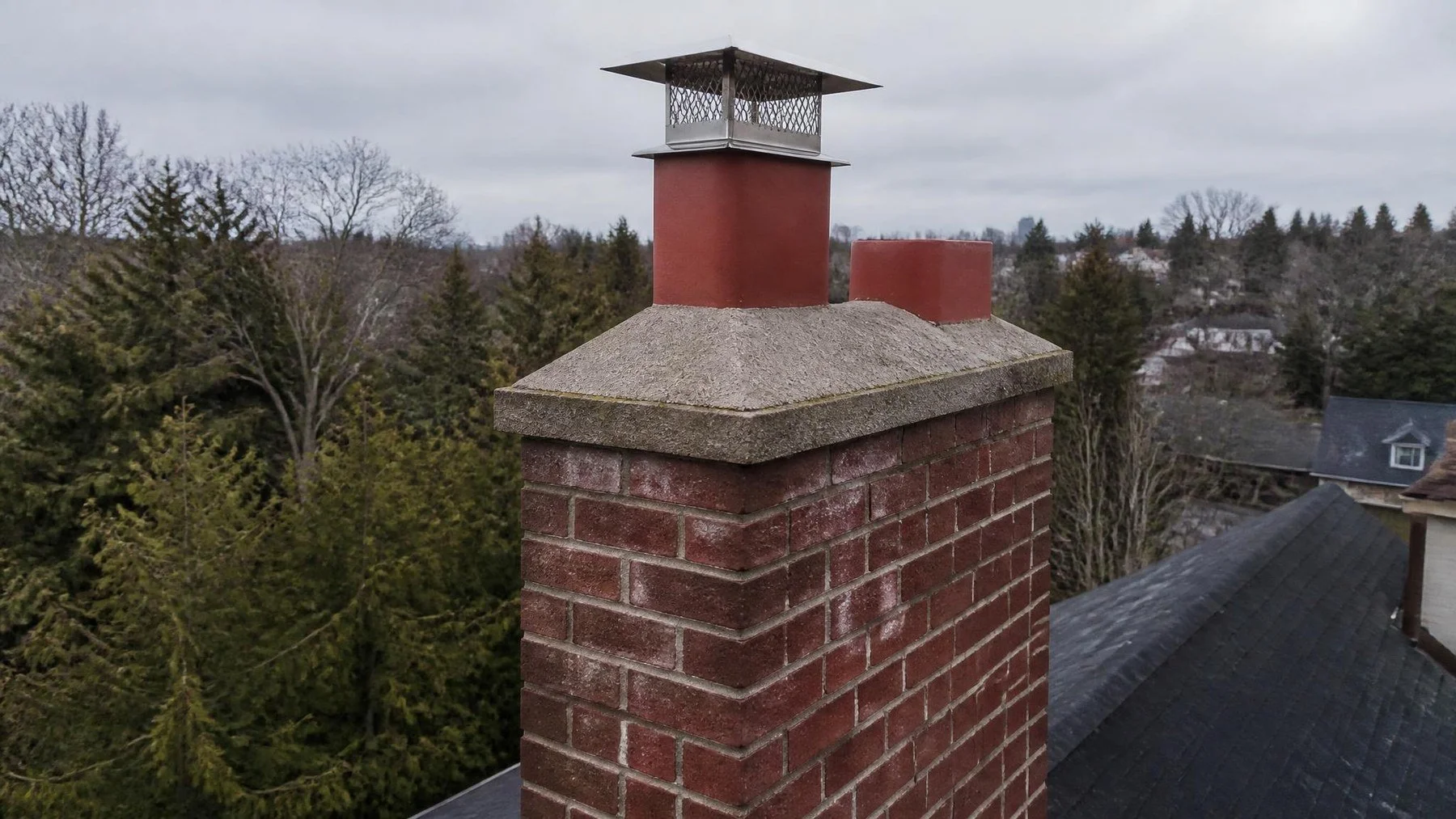
A cap, crown and roof flashing protect different openings. Identify the part before approving a repair: a cap shelters one or more flues, the crown covers the masonry top around them, and flashing manages the roof intersection. Interior staining can travel, so its location does not prove which component failed.
Name the part before you order a repair
A chimney cap shelters one or more flue openings. The crown is the masonry or concrete surface that spans the top of the chimney. Flashing seals the joint where the chimney passes through the roof. Water can enter at any of these points, so a wet ceiling does not identify the failed part by itself.
A missing cap creates a direct opening
The cap helps keep rain and debris out of the flue while allowing exhaust to leave. A loose, rusted, undersized, or missing cap deserves prompt attention. The replacement must fit the flue and the appliance it serves. A mason should not guess at venting requirements.
A cracked crown wets the chimney from above
The crown should slope away from the flues and project beyond the masonry. Cracks, failed joints at the flues, and broken edges let water enter the top courses. Repeated freeze and thaw exposure can then widen the damage.
Follow the water path
Look at the cap, crown, brick faces, mortar joints, and roof flashing as one system. Interior staining may appear away from the entry point. Brick Aid can assess the masonry and crown, document what it finds, and coordinate the repair boundary when roofing or venting work is also needed.
Sort the specialists by component
- Cap fit, corrosion and the number of flues covered
- Crown cracks, slope and joints around liners
- Roof flashing seams and the venting referral
Photographs should isolate three evidence sets. For the cap, record fit, corrosion and missing or displaced pieces. For the crown, record cracks, slope, edges and flue joints. For flashing, record open seams and the surrounding roofing without treating sealant as a complete flashing design. Appliance and venting compatibility belongs with a qualified chimney or HVAC professional. Masonry repair belongs with the mason.