
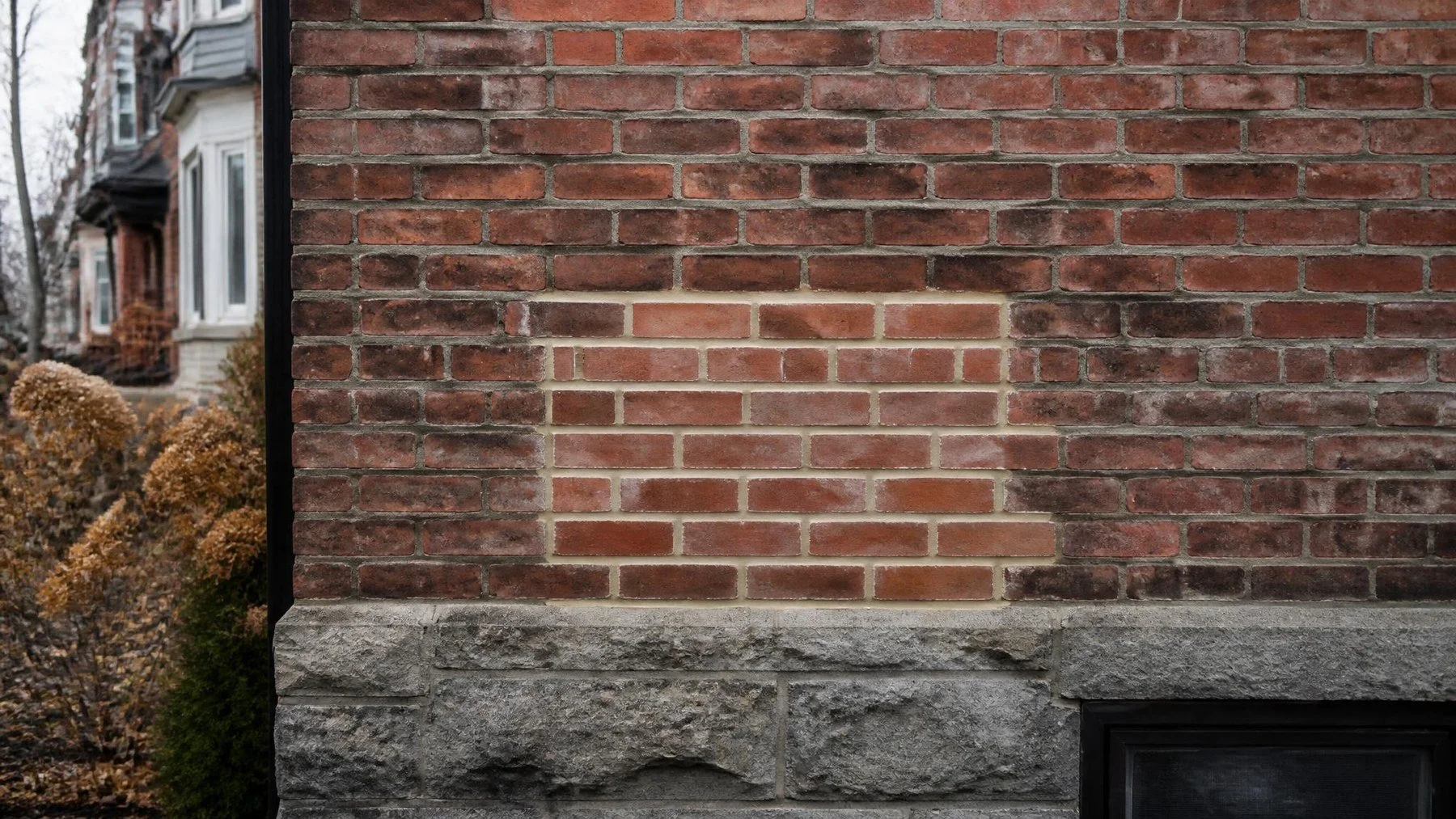
Choosing lime mortar for old brick starts with evidence from the wall, not the product label. A sample can reveal binder, aggregate, colour and texture, while a test panel shows how the proposed work looks and cures beside the original. Neither appearance nor laboratory analysis alone proves that a mix suits the building.
Start with the brick, not a mortar label
Older brick can be softer and more absorptive than modern units. The replacement mortar must work with that masonry and its exposure. Calling a product lime mortar does not prove it is compatible. The binder, aggregate, strength, vapour movement, colour, and joint profile all matter.
Keep sound historic material
Repointing should remove failed mortar without widening the joint or damaging the brick edges. Sound original mortar can remain. A small test area reveals colour, texture, tooling, and how the wall responds after curing.
Harder is not automatically better
A very hard, dense joint can force moisture and stress into softer brick. The appropriate mix lets the masonry assembly manage movement and moisture without making the brick the weak part. That is why sampling and observation come before selecting a mix.
Ask for a compatibility plan
A heritage masonry quote should identify the existing materials, removal method, proposed sample, joint finish, curing protection, and repair limits. Brick Aid studies original construction and can prepare a restoration scope for older Toronto masonry.
Turn the test panel into a written mortar decision
Retained sound mortar and protected brick edges
The assessment should retain sound original mortar and focus removal on failed joints. Record brick hardness and absorption, exposure, joint depth and profile, then compare the proposed mortar with both the units and surviving joints. A lime based product can still differ substantially in hydraulic content, strength and vapour movement. Ask the specification to explain the compatibility decision rather than naming a bagged product.
Include photographs of the cured test panel with the proposed joint profile and material specification before approving the work.