
Stone or Brick? Choosing Material for a Wall or Addition
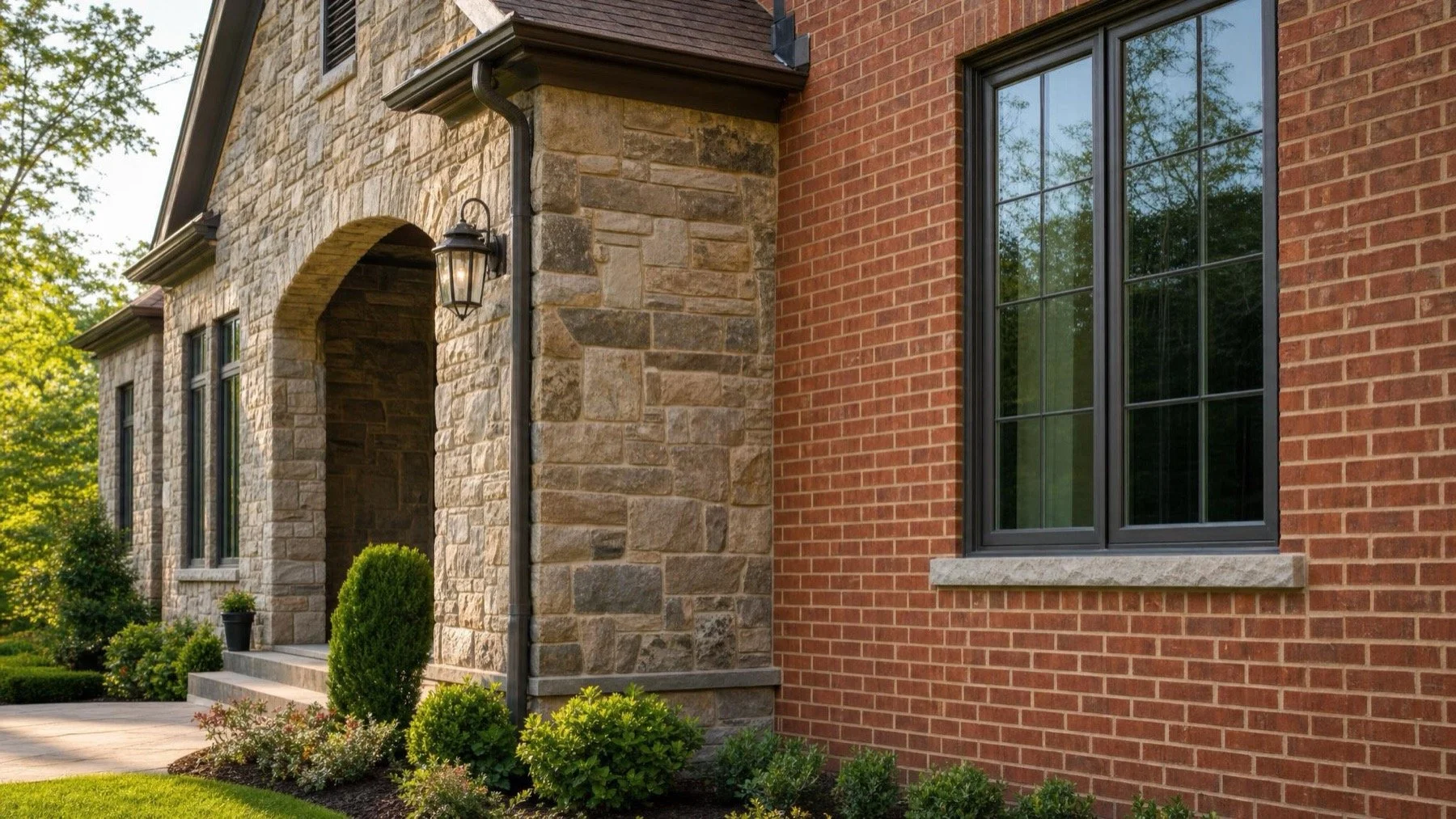
Brick and stone both last generations when they are built properly, so durability is rarely what decides between them.
What decides it is what the wall has to do, what the rest of the house already is, and how much of the budget is labour rather than material.
Start with the wall's job
A garden or retaining wall, a house addition and a feature elevation are three different problems, and they push toward different materials.
What the application favours
- Addition matching an existing brick house: brick, almost always
- Freestanding garden or retaining wall: stone handles irregular loading well
- Feature elevation or entrance: stone reads as a deliberate accent
- Large plain elevation: brick is faster and more economical per square foot
- Steps, caps and copings: stone, for wear resistance and appearance
Retaining applications carry their own engineering requirements, covered on our retaining walls page.
Know where the cost actually sits
Brick is dimensionally consistent. A mason lays it quickly because every unit is the same and the coursing is predictable.
Natural stone is not. Units vary in size, shape and thickness, and each one has to be selected, sometimes cut, and fitted to its neighbours. That selection time is the cost, and it is why stone runs meaningfully higher per square foot installed even when the material itself is competitively priced.
Where quotes diverge. Ask how the stone is being laid. Coursed or squared stone lays far faster than random rubble or dry stack. Two stone quotes on the same wall can differ substantially purely on the pattern being installed.
Compare stone against brick
| Brick | Natural stone | |
|---|---|---|
| Install speed | Fast, predictable coursing | Slow, unit by unit selection |
| Relative cost | Lower per square foot | Higher, mostly labour |
| Matching an existing house | Straightforward if brick | Reads as a deliberate contrast |
| Repairability | Replace individual units | Harder to source a match later |
| Design flexibility | Regular, formal lines | Curves, irregular forms, features |
The repairability row deserves weight. A brick can usually be matched years later. A specific stone from a specific quarry run may not be available when a repair is needed, so ordering surplus at the time of build is worth doing.
Check what the existing house dictates
An addition on a brick house that arrives in stone announces itself permanently. Sometimes that is the intent. Usually it is not, and it costs resale appeal.
Matching existing brick is its own discipline, since colour, size, texture and mortar all have to line up. Our post on how brick matching actually works covers what that involves and where it gets difficult.
On heritage properties the choice may not be yours. Designated buildings have material requirements, and altering the exterior generally needs approval before work starts. Our heritage restoration page covers that ground.
Plan for the trades and the timeline
Stone work takes longer on site, which affects more than the masonry line. Scaffold hire, site access and the trades scheduled behind the masonry all stretch with it.
Foundations differ too. Stone is heavier than brick veneer for the same elevation, so the footing and any supporting ledge have to be sized for it. That is a design decision, not something to resolve once the wall is going up.
Brickwork and new build detail sits on our brickwork and bricklaying page, with stone covered under stonework.
Choose the sample in the light where the wall will sit. North facing stone can read cooler than the same piece in direct sun, while deep mortar joints create stronger shadow. A small built panel shows the combined colour, scale and joint finish better than loose samples.
Frequently asked questions
Is stone more expensive than brick?
Installed, almost always. The material can be competitive but stone is laid unit by unit with selection and cutting, while brick courses quickly and predictably. The difference sits in labour rather than in the material price.
Can you mix stone and brick on the same house?
Yes, and it works when the transition is deliberate, such as stone to sill height with brick above, or stone framing an entrance. Mixing without a clear line tends to look unresolved rather than designed.
Which lasts longer, brick or stone?
Both outlast the buildings they are on when built and maintained properly. Longevity is usually decided by mortar selection, drainage and workmanship rather than by which material was chosen.
Should an addition match the existing brick?
In most cases yes, unless a contrast is genuinely intended. An unmatched addition reads as an addition permanently. Matching brick is achievable with sourcing effort, and it is worth doing before the wall goes up rather than after.
Is stone harder to repair than brick?
Often, because sourcing a matching unit years later can be difficult when a quarry run has changed or ended. Ordering surplus stone at the time of construction makes future repairs far easier.
Choose the material against the wall's job
Brick Aid Masonry works in both and will tell you where stone earns its cost and where brick is the better answer. Free on site assessments across Toronto and the GTA with a 2 year workmanship warranty. Call (647) 271-2697 or book a free assessment.