
Cracks in a Brick Wall: Which Ones Are Structural
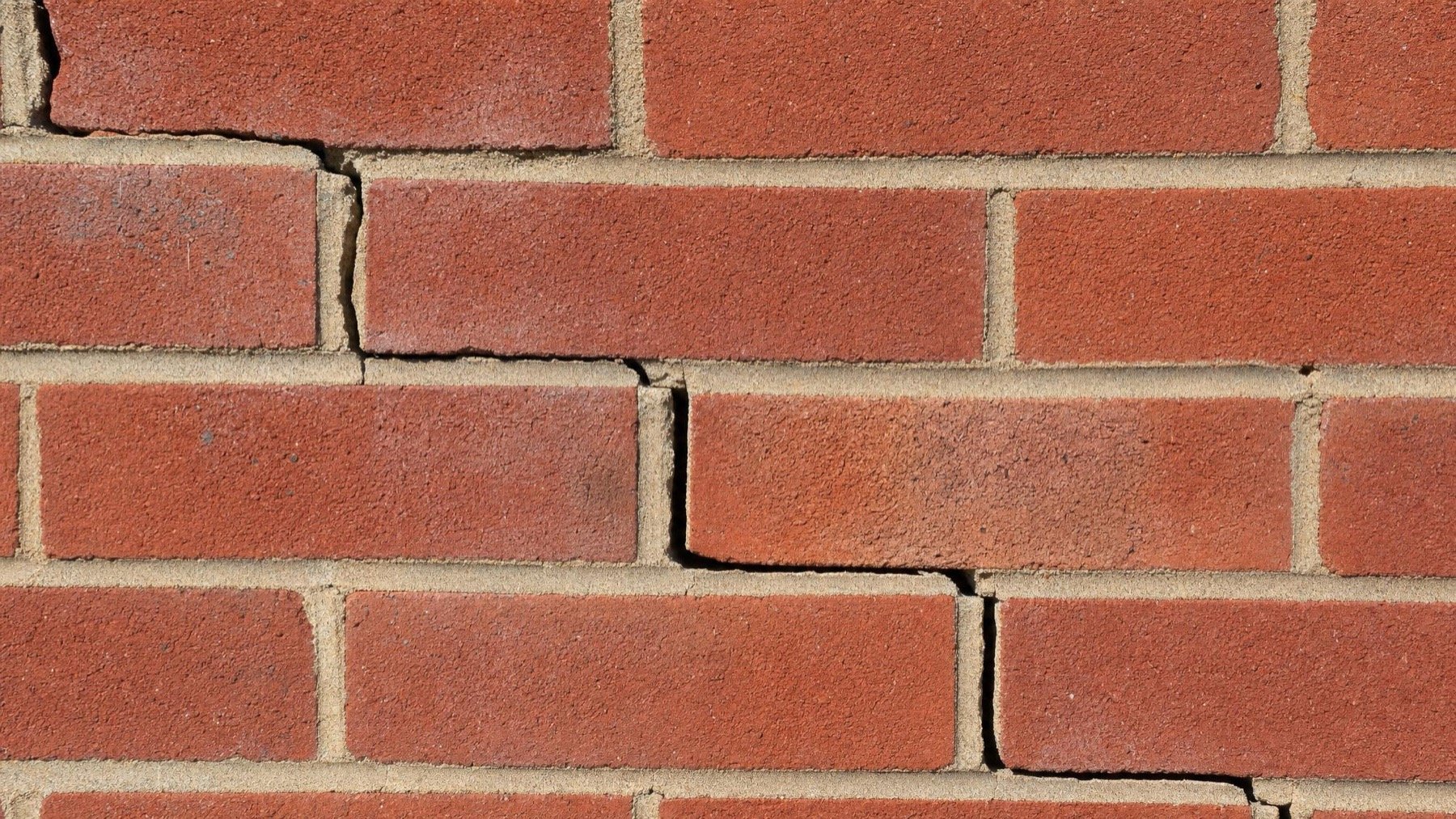
This is about cracks in the brick wall itself, above grade. Cracks in the foundation below are a different problem with different causes, and our guide to foundation cracks covers those.
Up in the wall, the pattern the crack traces is the diagnosis. A hairline in the wrong direction can matter more than a wide one in a predictable place.
Start by reading the pattern
Cracks take a small number of recognisable forms, and each one is produced by a different mechanism.
The four you will see most
- Stair step, following the joints diagonally: differential movement below
- Vertical, running through brick and joint alike: expansion or a hard restraint
- Horizontal along a bed joint: lateral pressure or corrosion expansion
- Radiating from an opening corner: stress concentration at the opening
A crack that passes straight through the brick units rather than tracking the joints indicates more force than a crack that follows the mortar. Mortar is meant to be the weaker material and to fail first.
Know where the crack sits
Location narrows the cause faster than anything else. The same shape means different things in different places on the wall.
Above an opening, a horizontal crack usually points to the lintel rather than the wall, which our guide to rusting lintels covers. At a corner it may be thermal movement where two elevations meet. Near the base it can be settlement below.
The pattern that warrants prompt attention. A horizontal crack part way up a wall with any bulge or lean is the one not to sit on. Vertical walls are meant to be vertical, and lateral displacement is a structural question rather than a cosmetic one.
Compare the common crack types
| Pattern | Usual mechanism | Concern level |
|---|---|---|
| Fine stair step, stable | Historic settlement, long finished | Low, monitor |
| Widening stair step | Ongoing differential movement | Assess |
| Vertical through units | Expansion with no relief joint | Assess |
| Horizontal at lintel line | Steel corrosion expansion | Assess, progressive |
| Horizontal with bulge or lean | Lateral movement or tie failure | Prompt assessment |
Most cracks on most houses fall into the first row. Old, stable, and finished moving years ago. The purpose of reading the pattern is to identify the minority that are not.
Check whether it is still moving
A crack that has stopped is a different problem from one that has not, and you can establish which with very little effort.
How to monitor it properly
- Photograph it with a ruler in frame and date the photo
- Mark the ends with a pencil line to see if it extends
- Repeat at the change of each season, since movement is often thermal
- Note whether it opens in cold weather, warm weather, or after heavy rain
Six months of dated photographs is worth more to whoever assesses the wall than any description, and it costs nothing but attention.
Get it assessed before you fill it
Filling a crack removes the evidence and the ability to monitor it while changing nothing about the cause. If the movement continues, it reappears, usually beside the repair rather than in it.
Repair follows diagnosis. Depending on the finding that might mean repointing, cutting in a movement joint, helical tie reinforcement, rebuilding a section, or addressing ground conditions before any masonry work at all.
Where the wall is solid masonry rather than veneer the assessment changes, because the brick is carrying load. Our guide to telling the two apart covers why. Remedial work sits under masonry repair.
Bring the assessor any renovation dates, nearby excavation history and old photographs you have. A crack that followed a new opening, roof alteration or neighbour excavation carries different evidence from one visible in a photograph taken twenty years ago. Context can prevent a sound wall from receiving an unnecessary repair.
Frequently asked questions
When is a crack in a brick wall serious?
When it is horizontal with any bulge or lean, when it passes through the bricks rather than the joints, or when it is measurably widening over months. Fine stable stair step cracks following the joints are usually old settlement.
What does a stair step crack in brick mean?
It follows the mortar joints diagonally and indicates differential movement, meaning one part of the wall has moved relative to another. Whether it matters depends on whether the movement has stopped.
Should I fill a crack in my brick wall?
Not before it has been assessed. Filling removes your ability to monitor it and does nothing about the cause, so if movement continues the crack simply reappears next to the repair.
How can I tell if a crack is still moving?
Photograph it with a ruler in frame, mark the ends in pencil, and repeat each season. Six months of dated images tells a mason far more than any verbal description of the crack.
Do all old brick houses have cracks?
Most do, and the majority are historic settlement that finished moving decades ago. The purpose of reading pattern, location and movement is to separate those from the small number that are still active.
Get the crack read before it gets filled
Brick Aid Masonry reads the pattern, identifies the mechanism, and tells you plainly when a crack needs monitoring rather than money. Free on site assessments across Toronto and the GTA with a 2 year workmanship warranty. Call (647) 271-2697 or book a free assessment.