
Parging Repair: When to Patch and When to Redo the Wall
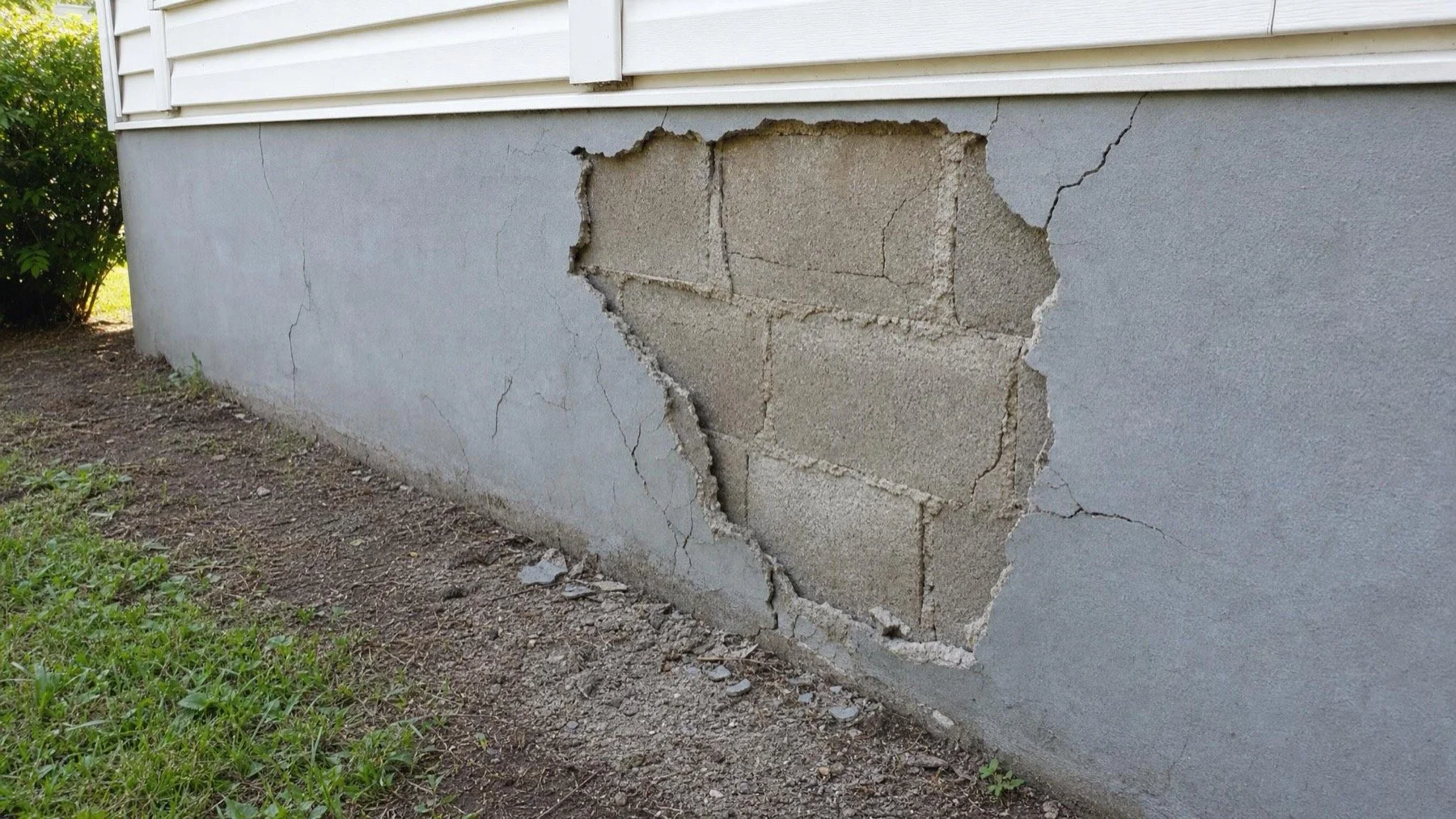
Parging cracks. That on its own tells you almost nothing about what the wall needs.
The question worth answering is why the coat let go, because that decides whether a patch will hold for a decade or fail again by spring.
Start with why the coat failed
Parging is a thin cement coat over block or poured concrete. It is a sacrificial finish, not waterproofing, and it fails for a small number of reasons that leave different evidence.
Read what the damage is telling you
- Hollow sounding areas that stay attached: the bond failed but the substrate is sound
- Coat lifting in sheets: it was applied over dust, paint, or a wet surface
- Cracks radiating from a corner: movement in the wall behind, not a coating problem
- Crumbling at grade only: splash, snow load and de icing salt
- Blistering with white residue: moisture pushing out from inside the block
Tap across the wall with the handle of a screwdriver. Solid sounds mean bonded. Hollow means the coat has released even where it still looks intact, and anything hollow will come off eventually.
Know when a patch actually holds
A patch is the right answer more often than most quotes suggest. It works when the failure is local, the surrounding coat is bonded, and the cause is something you can correct.
It does not work when more than roughly a third of the wall sounds hollow, when the original coat was applied over paint, or when the wall behind is still taking on water. In those cases a patch is just a deposit on the next repair.
The test that decides it. Cut back to sound, bonded material. If the sound edge keeps retreating as you cut, the coat has failed across the wall and patching is finished before it starts.
Compare a patch against a full recoat
| Condition | Patch fits | Full recoat fits |
|---|---|---|
| Extent | One area, sound edges | Hollow across large sections |
| Substrate | Clean block or concrete | Painted, sealed or contaminated |
| Cause | Local impact or splash | Original application or ongoing water |
| Appearance | Texture can be blended | Owner wants one uniform finish |
| History | First failure | Repeated patches in several places |
The appearance row matters more than people expect. A patch on a smooth troweled wall is nearly invisible. A patch on a heavily textured or painted wall almost never disappears, which sometimes pushes an otherwise sound wall to a full recoat for cosmetic reasons alone.
Check what sits behind the parging first
Parging covers the part of your foundation that shows above grade. If water is moving through that foundation, recoating traps it and the new work fails in the same places.
Look for these before any coating goes on
- Grade sloping back toward the wall
- Downspouts discharging within a foot of the foundation
- Cracks in the block visible where the old coat has come away
- Damp or efflorescence on the inside face of the basement wall
Where those show up, the coating is the last step and not the first. Our page on concrete and foundation repair covers what comes before it.
Get the mix and the timing right
Parging goes on in two thin coats, not one thick one, with the first scratched to key the second. Applied too thick it shrinks and cracks as it cures, which is the most common reason a fresh coat fails inside a year.
Temperature decides the season. The mix needs to cure above freezing throughout, so late spring through early autumn is the working window in Toronto. A coat rushed on in November is a coat you pay for twice.
If you want the background on what the coating is and why it cracks in the first place, our guide to what parging is covers the basics, and the full pricing picture is in our Toronto parging cost breakdown.
Frequently asked questions
Can you patch parging instead of redoing the whole wall?
Yes, when the surrounding coat is still bonded and the cause is local. Cut back to sound material, key the edges, and rebuild in two thin coats. If the sound edge keeps retreating as you cut, the wall needs a full recoat.
How long should parging last?
A correctly applied coat on a sound, dry foundation lasts fifteen to twenty five years. Coats applied too thick, over paint, or onto a wall that is still taking on water can fail within a year or two.
Why does my parging keep cracking in the same place?
A crack that returns in the same line is usually movement in the wall behind rather than a coating fault. Recoating hides it until the next season. The wall needs assessing before another coat goes on.
Can parging be applied over paint?
No. Cement will not bond to a painted surface. The paint has to come off back to clean block or concrete, which is why removal is priced separately and adds meaningfully to the job.
Is parging waterproofing?
No. It is a protective and cosmetic coat over block or concrete. It sheds surface water but it does not stop water moving through a foundation, and treating it as waterproofing is how walls end up recoated repeatedly.
Find out what your wall actually needs
Brick Aid Masonry sounds the wall, identifies why the coat failed, and quotes the repair that fits rather than defaulting to a full recoat. Free on site assessments across Toronto and the GTA with a 2 year workmanship warranty on parging repair in Toronto. Call (647) 271-2697 or book a free assessment.