
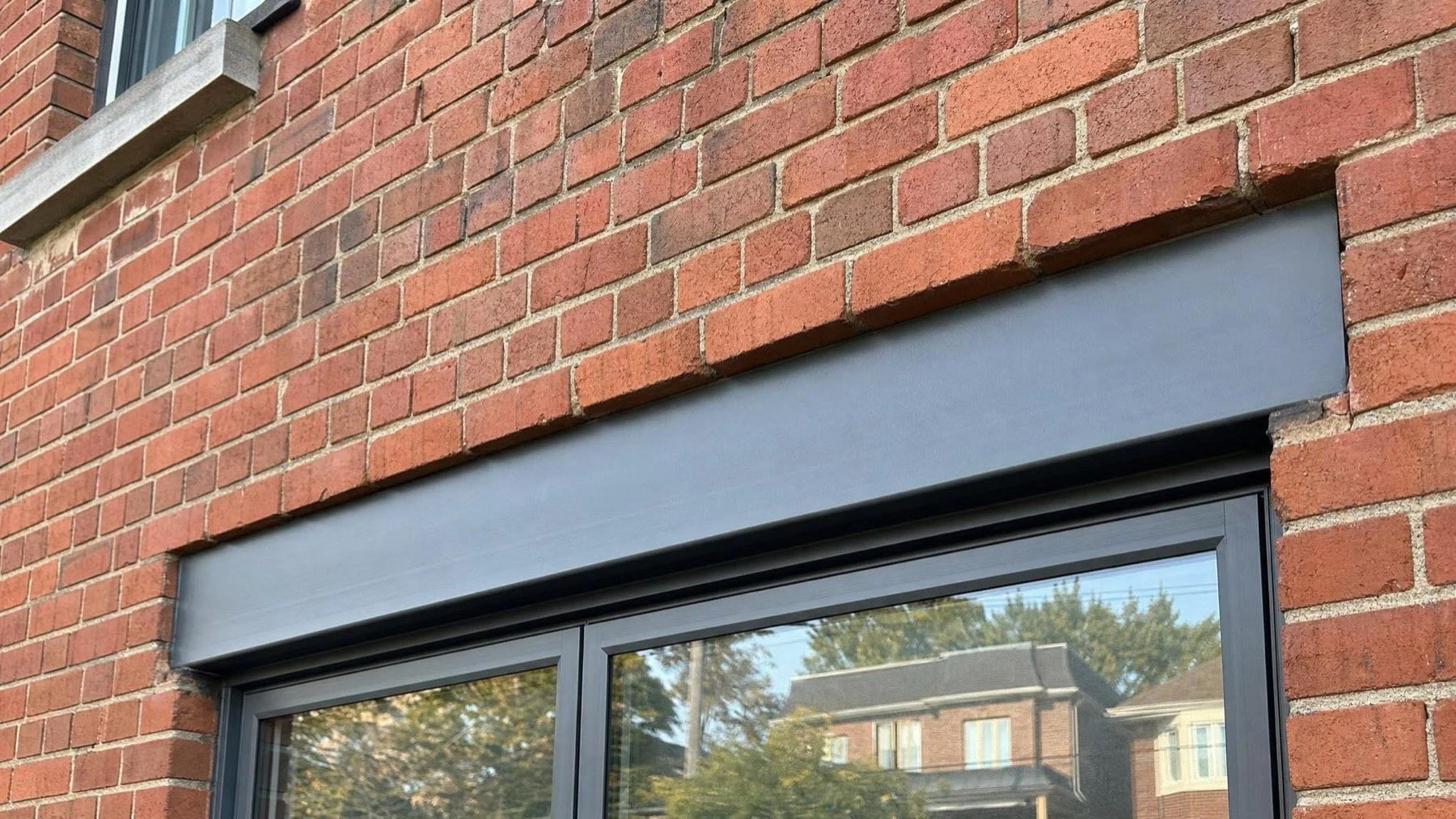
A lintel is not decorative trim above a window or door. It is the horizontal support that carries masonry across the opening.
You can often identify its type from the outside, and that tells you what movement, staining or cracking above the opening may mean.
Start with the load path
Brick and block transfer their weight downward through the wall. A window interrupts that path, so the masonry above needs a bridge that sends the load into solid wall on both sides.
See where the lintel bears
The lintel extends beyond each side of the opening and rests on masonry called the bearing. The required length depends on the opening, wall construction, material and load. That is why span sizing belongs to the design, not to a guess made after demolition.
A new or widened opening needs proper temporary support and a correctly selected lintel. Brick Aid explains that sequence on its window and door openings service page.
Identify the common lintel types
Toronto homes use several systems. The age and construction of the wall narrow the possibilities.
| Type | Where you see it | What to watch |
|---|---|---|
| Steel angle | Brick veneer over windows and doors | Rust staining and a horizontal joint crack |
| Precast concrete | Block and masonry walls | Cracks, spalls and exposed reinforcement |
| Stone | Older houses and formal facades | Cracks through the unit or failed end bearing |
| Brick arch | Historic solid masonry | Dropped units, open joints and spreading at the ends |
Some finishes hide the support completely. A soldier course above a window may be decorative brick in front of steel, while a true masonry arch carries load through its curved arrangement.
Check what your wall reveals
Look directly above the opening
- A thin metal edge under the first brick course points to a steel angle
- Wedge shaped joints radiating around a curve identify an arch
- A single solid grey or stone unit forms a concrete or stone head
- No visible support may mean it is concealed behind the outer course
Wall type matters too. Brick veneer uses the outer layer as a cladding, while solid masonry can carry building loads. Our guide to brick veneer and solid masonry helps you tell them apart before anyone proposes a repair.
Do not remove brick to investigate casually. Masonry above an opening can move as soon as its support or bearing is disturbed. Use visible clues first, then open the wall only within a planned repair.
Read the warning signs correctly
A lintel problem usually concentrates directly above an opening. A horizontal crack along the first bed joint, orange staining, lifted brick or a bowed metal edge points to corrosion in a steel angle.
Diagonal cracks from the upper corners can reflect movement around the opening, inadequate bearing or movement elsewhere in the wall. A crack that continues far beyond the opening needs a broader masonry assessment.
Separate definition from repair
Knowing what a lintel is helps you read the wall. Deciding how to repair corrosion is a different question. The staged options for exposed steel, displaced brick and advanced rust are covered in our rusted lintel repair guide.
Plan alterations around the lintel
Changing a window or door size changes the span and may change the load carried at each end. The new support must suit the wall, the opening and the work above it.
A sound plan states how the masonry will be held during the work, what lintel will be installed, how far it bears at each side, and how flashing and drainage will be restored. It should also explain how replacement brick and mortar will blend with the elevation.
For existing openings, protect the lintel by keeping joints, sills and flashing in good condition. Water that reaches concealed steel starts corrosion long before rust appears on the face.
Frequently asked questions
What is a lintel in a brick wall?
A lintel is a horizontal support over a window, door or other opening. It carries the masonry above the gap and transfers that load into the wall on each side.
Is a lintel the same as a beam?
A lintel is a type of beam used over an opening. The word describes its location and job, while beam is the broader structural term.
Can you see a window lintel from outside?
Often. A steel angle may show as a thin metal edge, an arch has wedge shaped joints, and a concrete or stone lintel appears as one solid unit. Some lintels remain concealed.
How do I know if my lintel is failing?
Look for a horizontal crack above the opening, rust staining, displaced brick, a bowed steel edge, or cracking through a concrete or stone unit. These signs need assessment before cosmetic repointing.
Can a lintel be replaced without changing the window?
Yes. Masons can support the wall, remove the required brick, replace the lintel and rebuild the course while leaving the window in place when its condition and access allow.
Find out what is carrying the wall
Brick Aid Masonry identifies the lintel, reads the cracks around it and scopes the support or repair the opening actually needs. Free on site assessments across Toronto and the GTA with a 2 year workmanship warranty. Call (647) 271-2697 or book a free assessment.