
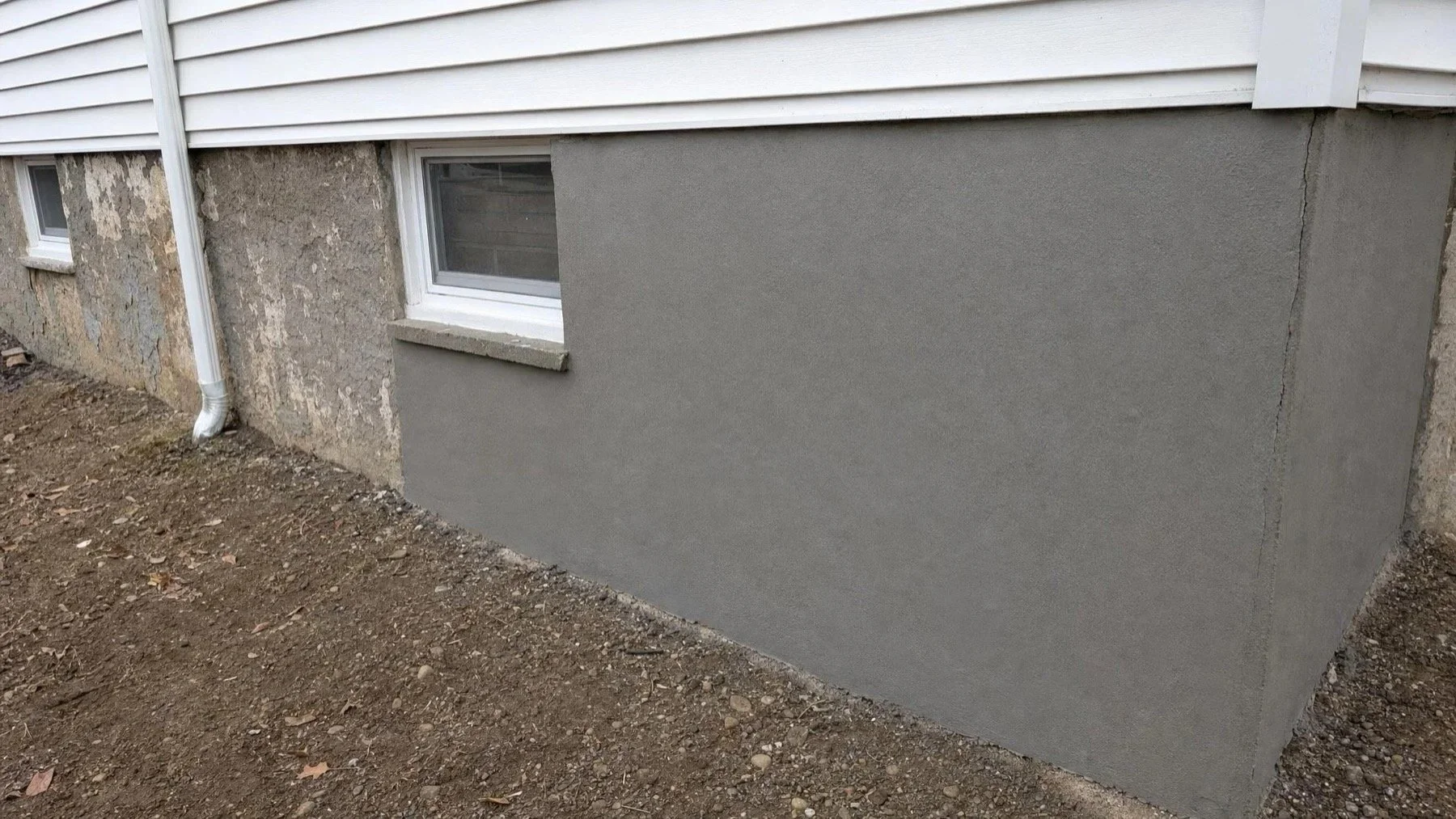
Fresh parging coat curing on a Toronto home foundation wall
Parging does not finish curing when the surface stops looking wet. The outside firms first while the cement reaction continues inside the coat.
Your real question is what the wall needs to withstand next, because light rain, paint, freezing nights and full service each require a different stage of cure.
Separate drying from curing
Drying means excess water leaves the surface. Curing means cement hydrates and the coat develops strength. Fast surface drying is not a shortcut to a strong finish.
Judge readiness by the next action
- Touch: the surface firms within the first day in suitable weather
- Light weather exposure: protect the fresh coat through its early set
- Paint or coating: wait for the parging and retained moisture to stabilize
- Full cure: strength continues developing for weeks
The installer should give you a project specific protection and coating schedule. Mix design, thickness and site exposure change the answer.
Control the first day carefully
The first hours decide whether the coat bonds and cures evenly. Strong sun, wind or a hot wall can pull moisture out too quickly, while rain can mark or wash a surface that has not set.
Hard to the touch does not mean rain ready. A fresh coat may resist a fingerprint and still be vulnerable to runoff, impact or a sudden temperature drop. Keep the planned protection in place.
Do not aim a sprinkler, downspout or pressure washer at new work. Keep people, tools and stored materials away from the wall until the installer confirms it can take contact.
Adjust the cure for Toronto weather
Moderate temperatures, shade and gentle humidity support an even cure. Heat and wind shorten working time. Cool weather slows strength gain, and freezing can damage a coat before it has matured.
| Condition | What it does | Response |
|---|---|---|
| Hot sun or wind | Dries the face too quickly | Shade the work and manage moisture |
| Cool weather | Slows set and strength gain | Allow more protection time |
| Rain forecast | Can streak or erode fresh work | Cover without trapping water against it |
| Freezing night | Risks early damage | Postpone or use a planned cold weather system |
This is why parging work in Toronto should be scheduled around the forecast rather than forced into a narrow calendar date.
Wait before painting or sealing
Paint creates a new moisture boundary. Applied too early, it can blister, discolour or slow the wall from drying evenly. A breathable coating still needs a cured, stable substrate.
Confirm three things first
- The parging has reached the cure period required by the mix and coating maker
- The wall shows no dark damp areas or recurring efflorescence
- The chosen product is compatible with cement based masonry
Parging is a finish and protective coat, not a substitute for foundation waterproofing. If moisture is moving through the wall, deal with the source before covering the evidence. Our guide to what parging does explains that distinction.
Watch for a cure that went wrong
Fine surface crazing can come from rapid drying or a mix placed too wet. Larger cracks, hollow sounding areas and sheets releasing from the wall point to movement, poor preparation or lost bond rather than ordinary drying.
Photograph new cracks before filling them. Their timing and pattern help separate a cure issue from movement in the foundation behind the coat.
If the coat has already failed, do not add another thin layer over loose material. Our parging repair guide explains when local removal works, while the parging cost guide shows why preparation changes the scope.
Keep a simple record of the installation date, daily weather and when protection came off. If marks appear later, that record helps identify whether early rain, rapid drying or movement behind the finish is the likely cause. Save the mix and coating names with the photographs so future maintenance follows compatible product guidance.
Frequently asked questions
How long does parging take to dry?
The surface usually firms during the first day in suitable weather, but curing continues for weeks. Follow the installer and product guidance for rain protection, painting and other work.
What happens if it rains after parging?
Rain can streak, mark or erode a coat that has not set. Proper covering keeps runoff away without pressing plastic against the fresh surface or trapping water at the wall.
Can parging dry too fast?
Yes. Hot sun, wind and a dry substrate can pull moisture from the coat before cement hydrates evenly. That raises the risk of weak bond and fine surface cracking.
How long should I wait before painting parging?
Wait for the cure period required by the parging mix and the coating manufacturer, then confirm the wall is evenly dry. Painting a damp coat can cause blistering and discolouration.
Can fresh parging freeze?
Fresh parging can suffer damage if it freezes before gaining enough strength. Schedule work for stable conditions or use a properly planned cold weather method rather than relying on a daytime high.
Give the new coat the cure it needs
Brick Aid Masonry prepares the wall, applies parging in suitable conditions and explains how to protect it through the early cure. Free on site assessments across Toronto and the GTA with a 2 year workmanship warranty. Call (647) 271-2697 or book a free assessment.